2026 Best Household Wire Types for Your Home Needs?
When it comes to home wiring, choosing the right Household Wire is crucial. An expert in the field, John Smith, once stated, "The right wire can make or break your home's electrical system." This highlights the significance of selecting appropriate types for various needs.
In 2026, many options for Household Wire will be available. It’s easy to feel overwhelmed by choices. From copper to aluminum wiring, each type has unique benefits. The right choice can ensure safety and efficiency. However, many homeowners may overlook essential factors, such as wire gauge and insulation type.
Choosing wire isn’t just about meeting standards; it’s about understanding your home’s specific requirements. Many people make mistakes by assuming one type fits all. This often leads to issues down the line. Reflecting on this can help you make better decisions for your home’s electrical needs.
Types of Electrical Wires: A Comprehensive Overview for Home Use
When choosing electrical wires for home use, it's crucial to understand the different types available. Each type serves specific purposes, influencing safety and efficiency. According to the National Electrical Manufacturers Association (NEMA), copper wires are widely preferred due to their excellent conductivity. However, they can be more expensive than alternatives. Aluminum wires, while cheaper, require careful handling to avoid potential hazards.
Romex and conduit are two popular cable types found in many homes. Romex is easy to install and great for indoor projects. It's lightweight and comes in various gauges. Some homeowners might overlook the gauge size, which is critical for the wire's carrying capacity. Conduit, on the other hand, offers better protection but can be cumbersome. Installation errors are common when working with conduit, leading to costly repairs.
While many sources recommend using 12-gauge wire for most household circuits, not every circuit requires this. Some may find it tempting to use 14-gauge wire for cost savings, especially in low-power areas. However, this can pose risks when unexpected loads arise. Choices in wiring directly impact energy efficiency and long-term costs, emphasizing the need for careful decisions.
2026 Best Household Wire Types for Your Home Needs
Understanding Wire Gauge: Importance and Selection for Household Projects
Understanding wire gauge is crucial for any household project.
The gauge of a wire indicates its thickness, which directly affects its ability to carry current.
Lower gauge numbers mean thicker wires. For example, a 12-gauge wire
can handle more load than a 16-gauge wire.
This is essential when wiring appliances or fixtures.
Choosing the right gauge involves more than just load capacity. It also depends on length and application.
Wires lose some current over long distances. A thick wire may be unnecessary for small, short tasks.
Yet, underestimating wire needs can lead to overheating.
Safety should always be your priority.
Not all projects require the same gauge. Some might call for changes in approach.
It's wise to reassess your selections. Improper choices can lead to costly repairs or even hazards.
Embrace the learning process.
Understanding wire gauge will only enhance your DIY skills.
Common Household Wire Types: PVC, UF, NM, and Their Applications
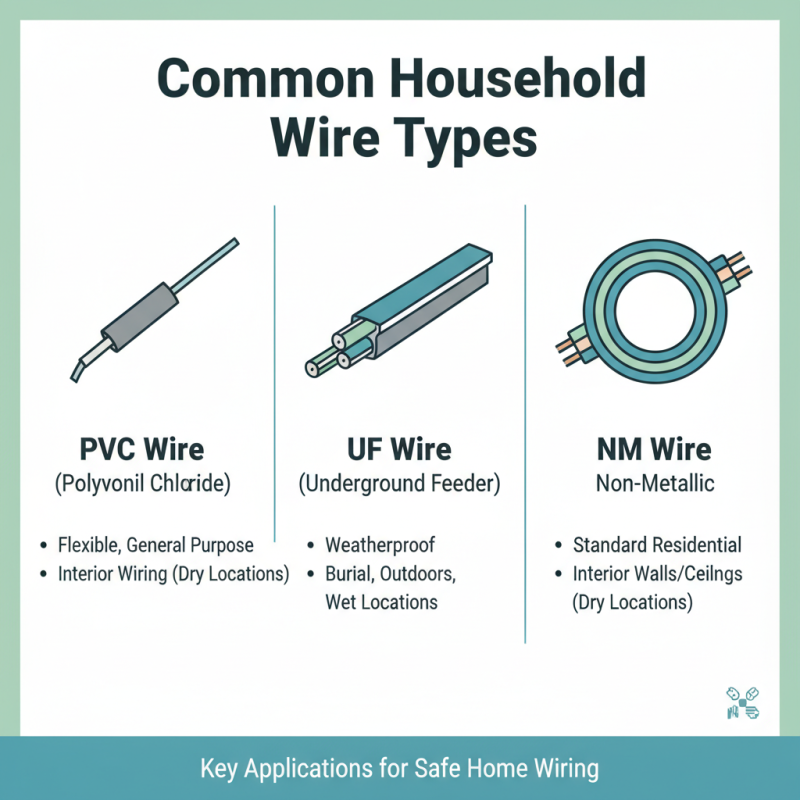
When wiring your home, knowing the common types of household wires is crucial. PVC, UF, and NM wires are among the most widely used in residential applications. PVC wires are flexible and often used for interior wiring. They come with insulation that protects against moisture and heat.
UF wires, or underground feeder wires, are designed for outdoor usage. Their tough exterior makes them ideal for applications like garden lighting. They resist sunlight, moisture, and even soil acidity. NM cables, or non-metallic cables, are prevalent inside walls. They are easier to handle due to their lightweight, but they need proper installation to avoid hazards.
According to a recent industry report from the National Electrical Manufacturers Association (NEMA), nearly 85% of household wiring uses NM cable. While this choice is budget-friendly, it may not withstand extreme conditions well. Therefore, assessing your environment is essential before making a selection. While these three types cover many household needs, there may be specific cases requiring different approaches. Therefore, always review the particular requirements for your project.
Safety Standards and Codes for Household Wiring: What You Need to Know
When it comes to household wiring, safety must always come first. Understanding safety standards is crucial. Different regions have codes that regulate how wiring should be done. These rules ensure that your home is safe from electrical hazards. Familiarize yourself with local regulations. Compliance is not just a safety measure; it's also the law.
Inspecting your wiring can reveal potential issues. Look for frayed wires or loose connections. These can lead to shorts or fires. Don’t ignore signs like flickering lights or tripped breakers. They may seem minor, but they can indicate bigger problems. Consider getting a professional to assess complicated issues. Their expertise might save you from serious troubles.
Tip: Always use the right gauge of wire. This affects the amount of current that runs through it. Incorrect gauge can overheat and cause danger. Keep wire connections clean and dry. Moisture can lead to corrosion and failures over time. Don't overlook these details. They are vital for a safe and efficient home.
2026 Best Household Wire Types for Your Home Needs
| Wire Type |
Gauge |
Material |
Typical Uses |
Safety Rating |
| Romex (NM Cable) |
14-2, 12-2 |
Copper |
Indoor wiring for outlets |
UL Listed |
| THHN/THWN |
14-10 |
Copper/Aluminum |
Electrical panels, conduits |
UL Listed |
| MC Cable |
14-2 |
Copper |
Indoor/outdoor commercial use |
UL Listed |
| UF Cable |
14-2 |
Copper |
Underground wiring |
UL Listed |
| Signaling Cable |
Various |
Copper |
Alarm systems, communications |
UL Listed |