7 Best Single Core Electrical Wires for Global Buyers
Choosing the right Electrical Wire Single Core can shape an installation’s safety, efficiency, and service life. Global buyers often compare copper or aluminium conductors, PVC or XLPE insulation, voltage ratings, flexibility, and temperature limits. These details matter inside control panels, residential circuits, solar systems, and industrial equipment. A wire that looks similar may perform differently under heat, vibration, or repeated bending.
The seven options discussed in this guide represent practical choices for different applications and purchasing priorities. Some offer excellent conductivity through finely stranded copper. Others provide stronger insulation for outdoor exposure, moisture, or higher operating temperatures. Look closely. Product labels should show conductor size, insulation material, rated voltage, temperature range, and recognized testing information. Requirements can differ between markets, so buyers should confirm local standards and request current technical documents from reputable manufacturers. Samples also deserve attention. Check the jacket for clean printing, consistent thickness, and damage-free surfaces before placing a large order. A low price may hide weaker insulation or inconsistent dimensions. That risk is easy to underestimate. The ideal wire depends on the complete installation, not one attractive specification. This guide aims to support careful comparisons using practical engineering considerations, supplier credibility, and real purchasing concerns. It is not a substitute for local electrical design or professional inspection. Some recommendations may need adjustment after field testing, because actual temperature, routing, and load conditions can challenge even a well-selected product.
IEC 60228 Conductor Classes: Class 1, 2, 5, and 6 Explained
Choosing the best single core electrical wire starts with understanding IEC 60228 conductor classes.
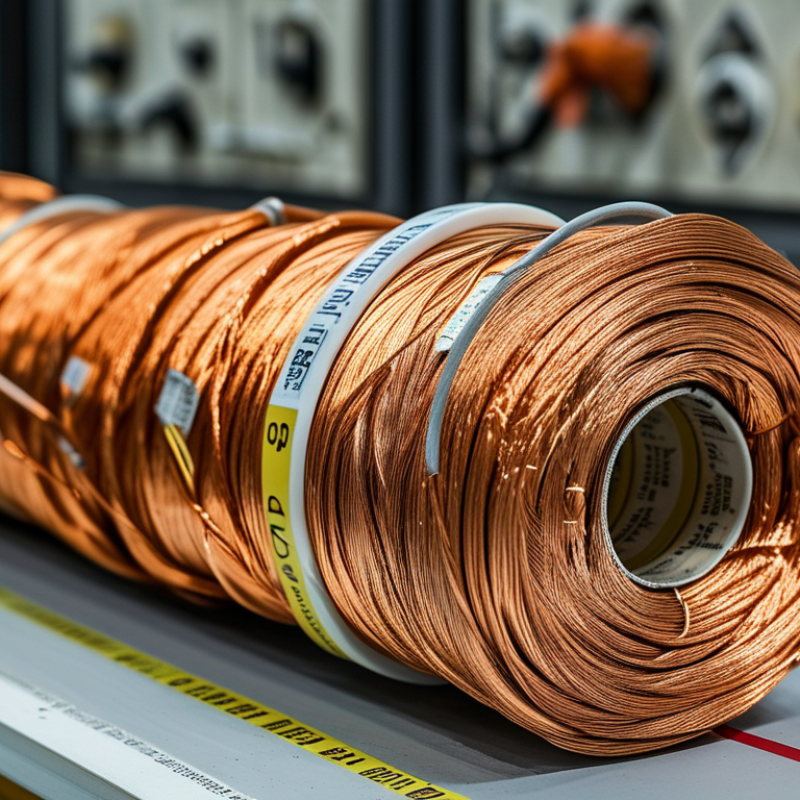
Class 1 uses one solid conductor. It offers a clean shape, stable routing, and reliable termination in fixed installations.
Class 2 uses several wires, creating a rigid stranded conductor. It bends more easily than solid wire and suits panels, distribution boards, and industrial equipment.
Class 5 is flexible and contains many fine wires. It works well where vibration, repeated movement, or tight bends are expected. Class 6 is even more flexible, making it useful for compact equipment and frequent movement. However, flexibility can make termination harder. A suitable ferrule or approved terminal may be necessary. The conductor class does not define insulation, voltage rating, or fire performance. Buyers must check those details separately.
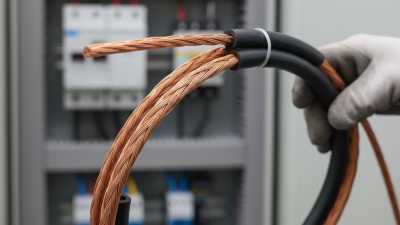
A practical shortlist includes solid copper for fixed wiring, rigid stranded copper for control panels, flexible copper for machinery, and extra-flexible copper for moving equipment. Tinned conductors can help in humid environments, but tinning does not change the IEC conductor class. Aluminium conductors may reduce weight, yet their larger size and termination requirements need careful review.
I would not call any class universally best. In field work, I have seen a technically correct cable fail because its bending radius was ignored. Check conductor resistance, cross-sectional area, temperature rating, terminal compatibility, and local installation rules before ordering. Small details matter.
Seven Best Single-Core Wire Types Rated from 300/500 to 450/750 V
Global buyers often compare single-core wires by voltage rating, conductor structure, insulation, and installation conditions. Seven practical types cover many projects from 300/500 to 450/750 V.
Solid copper wire with PVC insulation suits fixed lighting and control circuits at 300/500 V. Stranded copper PVC wire bends more easily during panel wiring.
Flexible PVC-insulated copper wire, commonly rated 450/750 V, handles repeated movement better. It is useful inside equipment, though not every flexible wire is designed for continuous motion.
Heat-resistant PVC wire supports warmer panels and enclosed equipment, but its temperature limit must match the installation. Halogen-free, low-smoke wire rated 450/750 V is often selected for public buildings and restricted spaces. It can reduce corrosive smoke, yet its insulation may feel less forgiving during tight bends.
Rubber-insulated single-core wire offers strong flexibility and abrasion resistance for workshops or temporary equipment. It still needs careful protection from oils, sunlight, and sharp edges.
Aluminum-core wire with suitable insulation can reduce weight and material cost in larger fixed installations, although its terminations demand greater attention.
In field purchasing, I check the conductor class, cross-sectional area, temperature rating, outer diameter, and test documentation. A bold voltage label is not enough. I have seen wires pass visual inspection but fail because the terminal was poorly matched. Confirm the required standard, length tolerance, packaging, and batch traceability before approval. Ratings such as 300/500 V or 450/750 V should always be verified against the complete product specification.
Copper and Aluminum Conductors: IACS Conductivity and Weight Comparison
For global buyers comparing single-core electrical wires, conductor material changes both performance and shipping weight. The International Annealed Copper Standard (IACS) assigns annealed copper a conductivity reference of 100% IACS at 20°C. Electrical-grade aluminum commonly reaches about 61% IACS, according to conductivity values used in IEC and ASTM conductor specifications.
Aluminum therefore needs a larger cross-sectional area for the same resistance. Its required area is roughly 1.6 times that of copper. Yet aluminum density is only about 2.70 g/cm³, compared with copper at approximately 8.96 g/cm³, based on engineering material data and USGS mineral commodity references. At equal resistance, an aluminum conductor can weigh close to half as much as copper. That difference affects cable trays, installation labor, and freight calculations.
Copper remains attractive where space is limited. A compact copper core can fit tighter terminals and usually offers easier termination. Aluminum is useful for longer routes, where lower mass and material cost may outweigh its larger diameter. Temperature matters. Conductivity falls as conductor temperature rises, and actual resistance depends on stranding, joints, and contact pressure. Numbers need context.
IEC 60228 provides conductor resistance and class requirements, but buyers should still request test reports for the actual wire. IACS percentages alone do not prove production consistency. In practice, a small connection fault can erase the expected advantage of a high-conductivity conductor. That detail is easy to overlook.
7 Best Single Core Electrical Wires for Global Buyers - Copper and Aluminum Conductors: IACS Conductivity and Weight Comparison
| No. |
Single-Core Conductor Type |
Typical Material / Temper |
Electrical Conductivity
(% IACS at 20°C) |
Resistivity
(Ω·mm²/m at 20°C) |
Resistance
(Ω/km, 10 mm²) |
Bare Conductor Mass
(kg/km, 10 mm²) |
Weight vs. Annealed Copper |
Typical Strengths |
| 1 |
Annealed Copper Wire |
Electrolytic tough-pitch copper, soft/annealed |
100 |
0.01724 |
1.724 |
89.6 |
100% |
Highest conductivity, excellent flexibility and reliable termination performance. |
| 2 |
Hard-Drawn Copper Wire |
Electrolytic copper, hard-drawn temper |
97 |
0.01777 |
1.777 |
89.6 |
100% |
Higher tensile strength and better dimensional stability than annealed copper. |
| 3 |
Tinned Annealed Copper Wire |
Annealed copper core with a thin tin coating |
100
copper core |
0.01724 |
1.724 |
89.61 |
100%1 |
Improved corrosion resistance and solderability in humid, marine or chemically exposed environments. |
| 4 |
EC Aluminum 1350-O Wire |
Electrical-conductor-grade aluminum, annealed |
61 |
0.02826 |
2.826 |
27.0 |
30.1% |
About 70% lighter than copper with good conductivity and high flexibility. |
| 5 |
EC Aluminum 1350-H16 Wire |
Electrical-conductor-grade aluminum, semi-hard |
61 |
0.02826 |
2.826 |
27.0 |
30.1% |
Lower weight with greater mechanical strength than soft aluminum conductor. |
| 6 |
Aluminum Alloy 6201-T81 Wire |
Aluminum-magnesium-silicon alloy, hard temper |
52.5 |
0.03284 |
3.284 |
27.0 |
30.1% |
High tensile strength for lightweight overhead, utility and mechanically demanding conductors. |
| 7 |
8000-Series Aluminum Wire |
Electrical-grade aluminum alloy, typically 8176-type |
61 |
0.02826 |
2.826 |
27.0 |
30.1% |
Designed for electrical wiring with improved creep resistance and reduced installation weight. |
Comparison basis: Values are reference conductor data at 20°C for a 10 mm² bare conductor. Resistance is calculated as resistivity × conductor length ÷ cross-sectional area. Bare conductor mass is calculated using approximate densities of 8.96 g/cm³ for copper and 2.70 g/cm³ for aluminum.
1 Tinned-copper values are based on the copper core; the actual finished mass depends on tin-coating thickness. Actual cable weight, ampacity and voltage drop also depend on insulation, installation method, ambient temperature, conductor construction and applicable national standards.
PVC, XLPE, and PTFE Insulation: Temperature Ratings from 70°C to 200°C
Global buyers often compare single-core wires by temperature first, but insulation chemistry matters just as much. A 70°C PVC wire suits lighting circuits, control panels, and ordinary indoor conduits. Heat-resistant PVC versions rated at 90°C or 105°C handle warmer switchboards and compact machinery. They remain cost-effective, but PVC can stiffen near its upper limit. Check the datasheet carefully.
XLPE insulation provides stronger thermal performance and good moisture resistance. A 90°C XLPE wire fits power distribution and industrial equipment. Higher-rated 105°C and 125°C XLPE options support crowded trays, motors, and areas with limited heat dissipation. The conductor size still affects temperature rise. Bigger is not automatically safer. Installation spacing matters.
For extreme heat, PTFE-insulated single-core wire can operate around 200°C, making it suitable for ovens, sensors, aerospace equipment, and high-temperature cabinets. It resists many chemicals, but its higher cost and more difficult termination require planning. The seven practical choices are 70°C PVC, 90°C PVC, 105°C PVC, 90°C XLPE, 105°C XLPE, 125°C XLPE, and 200°C PTFE. These ratings are common reference points, not universal guarantees. Voltage, ambient temperature, bending radius, flame rules, and local certification can change the correct selection. A common mistake is choosing PTFE only for its impressive rating. That can waste budget when a properly sized PVC or XLPE wire performs reliably.
7 Best Single-Core Electrical Wires for Global Buyers
Typical maximum continuous conductor temperature by insulation type. PVC is commonly rated at 70°C, XLPE at 90°C, and PTFE at up to 200°C. Actual ampacity also depends on conductor size, installation method, ambient temperature, and applicable standards.
Global Buying Criteria: IEC, UL, RoHS, REACH, Ampacity, and Voltage Drop
For global buyers, the seven strongest single-core choices are solid copper PVC, stranded copper PVC, flexible Class 5 copper, XLPE, LSZH, tinned copper, and fire-resistant insulated wire. IEC 60228 defines conductor classes and resistance limits, making it a useful comparison point. Solid conductors suit fixed panels. Flexible conductors handle vibration and repeated movement better. XLPE withstands higher operating temperatures, while LSZH reduces smoke and corrosive gas in enclosed spaces.
Compliance must be checked before price. IEC 60332 evaluates flame propagation, while UL 44 and UL 758 cover different cable applications in North American markets. RoHS Directive 2011/65/EU restricts listed hazardous substances. REACH adds substance-registration and communication duties. Ask for current declarations, test reports, conductor class, insulation temperature rating, and batch traceability. Documents can be incomplete. That is a practical risk.
Tips: Compare ampacity and voltage drop together. NEC 2023 Table 310.16 lists 12 AWG copper at 30 A under its 90°C column, but terminal limits and installation conditions may reduce that value. The NEC commonly recommends keeping branch-circuit voltage drop near 3%, with feeder and branch-circuit drop often considered within 5%. Use the conductor’s actual length, load current, ambient temperature, grouping, and installation method. A small cable may pass a catalog test yet fail on a long, warm route. EU and North American calculations may also differ. Check both.