Hesheng Cable
Leave Your Message

China Top 10 Three Core Flat Cable Manufacturers?

China’s Three Core Flat Cable market is broad, practical, and easy to misread. A factory may show polished samples, automated lines, and impressive production figures. Yet the real test often appears inside a control cabinet. Look closely at conductor alignment, insulation thickness, bending marks, and terminal fit. Small differences can affect installation time and long-term stability.

This guide examines ten leading Chinese manufacturers associated with Three Core Flat Cable production. The selection considers manufacturing experience, material control, testing capacity, customization, export service, and documented quality practices. It does not treat company size as proof of technical superiority. That would be too simple. A large supplier may offer scale, while a smaller specialist may respond faster to unusual dimensions or insulation requirements.

Cable engineer Michael R. Davis explains, “A flat cable earns trust through consistent geometry, not attractive specifications alone.” This observation is useful when comparing suppliers. Buyers should inspect conductor materials, voltage ratings, temperature ranges, flame performance, and bending requirements. They should also request current certificates and representative samples. Website claims can become outdated.

There is no universal best manufacturer. The right choice depends on equipment design, operating environment, order volume, and delivery expectations. Some suppliers may appear ideal during sampling but struggle with repeatability. Others may have limited branding yet maintain disciplined production records. That difference matters.

The following overview offers a practical starting point. It also leaves room for careful verification. Check the details. Then compare performance, not promises.
China Top 10 Three Core Flat Cable Manufacturers?

Definition and Standards: Three-Core Flat Cables, IEC 60227, and UL 758

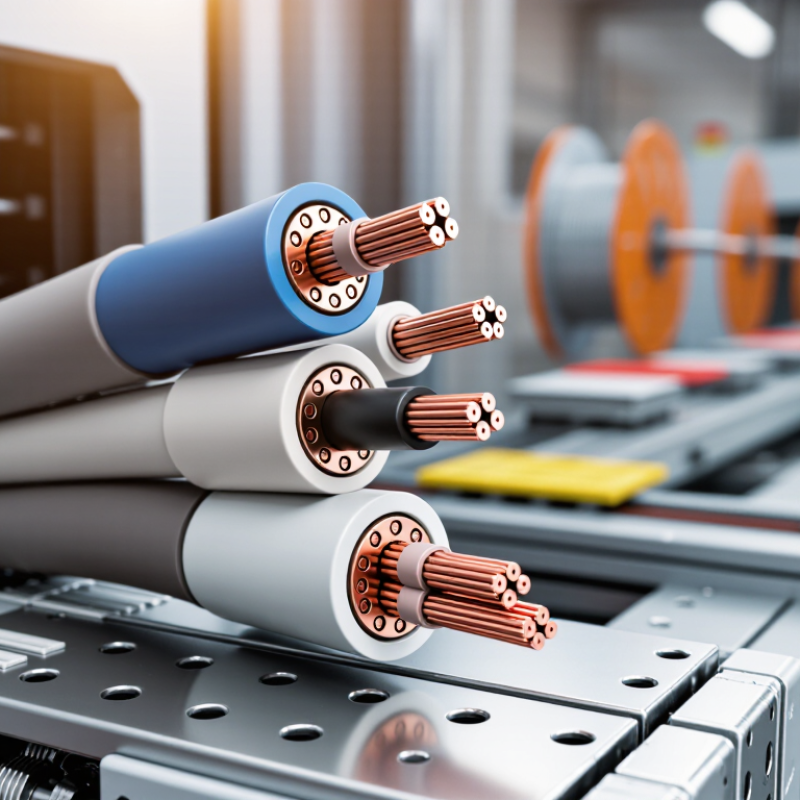
Three-core flat cables contain three insulated conductors arranged side by side in one compact profile. This shape supports tidy routing inside appliances, control panels, lighting equipment, and low-voltage assemblies. The conductors commonly use stranded copper for flexibility, while PVC insulation provides basic electrical and mechanical protection. The wording is easy to oversimplify. A flat cable is not automatically suitable for every moving application.

IEC 60227 covers PVC-insulated cables with rated voltages up to 450/750 V, depending on the applicable cable type and construction. Its requirements address conductor resistance, insulation performance, voltage testing, dimensions, and marking. Testing must match the declared type. A supplier should provide clear test reports, production traceability, and consistent dimensional records. A printed compliance claim alone proves very little.

UL 758 applies to Appliance Wiring Material and focuses on recognized constructions used within electrical equipment. Its evaluation can include insulation thickness, temperature and voltage ratings, flame performance, conductor details, and required markings. These ratings should not be confused with automatic approval for a finished appliance. During factory assessment, buyers should inspect conductor stranding, insulation concentricity, spark-test records, bend behavior, and batch identification. Small defects matter. One overlooked edge, weak print, or inconsistent thickness can affect assembly reliability. Some specifications also need clarification before production, especially when IEC and UL requirements are requested together. That is where documentation often becomes imperfect.
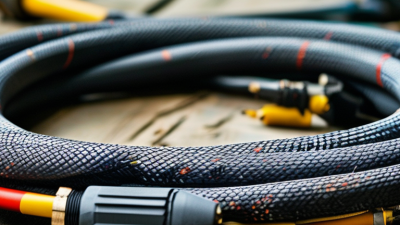
China’s Top 10 Manufacturers: 300–600 V Ratings, Sizes, and Product Range

China’s Top 10 Three-Core Flat Cable Manufacturers: 300–600 V Ratings, Sizes, and Product Range

A credible top-ten shortlist should compare tested specifications, not only factory scale. In China, leading manufacturers commonly offer three-core flat cables rated from 300/500 V to 450/750 V, with some customized versions reaching 600 V. Typical conductor sizes range from 0.5 to 6 mm². Copper conductors, PVC insulation, and flexible outer jackets remain common choices for machinery, lighting, elevators, and compact control systems. IEC 60227 and GB/T 5023 provide useful references for voltage, insulation, and testing requirements.

Market context matters. Grand View Research valued the global wire and cable market at about USD 205 billion in 2022, with continued growth expected through 2030. This demand increases product variety, but it can also hide uneven quality. The strongest Chinese suppliers usually provide flame-retardant options, color-coded cores, defined bending radii, and batch test records. Their catalogs may include parallel, shielded, oil-resistant, and temperature-resistant designs. Not every catalog line is equally mature.

Tips: Request samples before bulk purchasing. Check conductor cross-section, jacket thickness, voltage markings, and cold-bend performance. Ask for third-party test reports and traceable batch numbers. A factory visit helps, but it is not proof alone. Some suppliers list wide size ranges without stable production experience. That deserves careful review.

China Top 10 Three Core Flat Cable Manufacturers? – China’s Top 10 Manufacturers: 300–600 V Ratings, Sizes, and Product Range

Anonymized comparison of representative Chinese manufacturers supplying three-core flat flexible cables for industrial, lifting, automation, and power-distribution applications

Profile Typical Rated Voltage Conductor Construction Common Three-Core Sizes Insulation and Sheath Options Product Range Typical Standards or Markings Common Applications Customization Capability
Manufacturer Profile 01 300/500 V
450/750 V
Stranded or finely stranded annealed copper; flexible Class 5 conductors available 3 × 0.75 mm² 3 × 1.0 mm² 3 × 1.5 mm² 3 × 2.5 mm² PVC insulation and PVC outer sheath; flame-retardant formulations available Flat control cable, flat power cable, elevator traveling cable, compact flexible cable GB/T 5023, IEC 60227, RoHS options Control panels, small lifting systems, machine tools, indoor automation equipment Custom conductor colors, pitch, jacket color, printing, and cut lengths
Manufacturer Profile 02 300/500 V
300/600 V
Extra-flexible stranded copper with optional tinned copper construction 3 × 0.75 mm² 3 × 1.5 mm² 3 × 2.5 mm² 3 × 4 mm² PVC, TPU, or oil-resistant PVC sheath; abrasion-resistant versions available Flat drag-chain cable, robotic cable, mobile equipment cable, control cable IEC 60227, IEC 60332-1, CE and RoHS options Conveyor systems, packaging machinery, automated production lines, mobile equipment Special bending radius, shielded versions, numbered cores, and custom lengths
Manufacturer Profile 03 450/750 V
600 V
Plain or tinned copper; compact stranded conductors for reduced cable thickness 3 × 1.0 mm² 3 × 1.5 mm² 3 × 2.5 mm² 3 × 6 mm² Heat-resistant PVC insulation; PVC or low-smoke halogen-free sheath options Three-core flat power cable, low-smoke cable, industrial connection cable GB/T 12706, IEC 60502-1 options, RoHS-compliant materials Industrial power distribution, control cabinets, equipment wiring, commercial facilities Voltage, conductor size, sheath compound, and identification marking can be specified
Manufacturer Profile 04 300/500 V
450/750 V
Fine-stranded bare copper with high-flexibility lay-up 3 × 0.5 mm² 3 × 0.75 mm² 3 × 1.0 mm² 3 × 2.5 mm² Flexible PVC insulation and jacket; cold-resistant grades available Miniature flat cable, sensor/control cable, appliance cable, instrumentation cable IEC 60227, VDE-style construction options, RoHS options Office equipment, appliances, sensors, lighting controls, light-duty machinery Low-profile dimensions, conductor color coding, stripped ends, and terminal processing
Manufacturer Profile 05 300/500 V
300/600 V
Flexible annealed copper; optional overall foil or braid shield 3 × 1.0 mm² 3 × 1.5 mm² 3 × 2.5 mm² 3 × 4 mm² PVC or TPU insulation and sheath; oil-resistant and UV-resistant versions available Shielded flat control cable, servo auxiliary cable, data/control hybrid cable IEC 60332-1, IEC 60227, EMC-oriented construction options Servo systems, CNC equipment, automated assembly lines, variable-speed machinery Shielding coverage, drain wire, torsion resistance, and cable geometry customization
Manufacturer Profile 06 450/750 V
600 V
Stranded copper conductors with optional flexible Class 5 construction 3 × 1.5 mm² 3 × 2.5 mm² 3 × 4 mm² 3 × 10 mm² PVC or cross-linked insulation; flame-retardant and heat-resistant sheath options Heavy-duty flat power cable, crane cable, hoist cable, mobile power cable GB/T 5023, GB/T 12706, IEC 60502-1 options Cranes, hoists, stage equipment, port machinery, industrial handling systems Reinforced jacket, copper screen, support element, and custom current capacity designs
Manufacturer Profile 07 300/500 V
450/750 V
Fine-stranded copper with symmetrical three-core arrangement 3 × 0.75 mm² 3 × 1.0 mm² 3 × 1.5 mm² 3 × 4 mm² PVC, TPU, or LSZH insulation and sheath depending on application Elevator flat cable, traveling cable, flat elevator control and signal cable EN 50214-style construction options, IEC 60332, RoHS options Passenger elevators, service lifts, moving platforms, vertical conveying systems Travel length, suspension configuration, core count, filler, and jacket color customization
Manufacturer Profile 08 300/500 V
300/600 V
Flexible copper conductors; optional tinned copper for humid or corrosive environments 3 × 0.5 mm² 3 × 0.75 mm² 3 × 1.5 mm² 3 × 2.5 mm² Oil-resistant PVC, TPU, or halogen-free compounds Flat marine cable, outdoor control cable, corrosion-resistant flexible cable IEC 60227, IEC 60332, RoHS and REACH material options Outdoor machinery, marine auxiliary systems, wastewater equipment, mobile controls Water resistance, UV resistance, cold flexibility, and special outer-jacket compounds
Manufacturer Profile 09 450/750 V
600 V
High-flexibility stranded copper; optional low-capacitance conductor arrangement 3 × 1.5 mm² 3 × 2.5 mm² 3 × 4 mm² 3 × 6 mm² Heat-resistant PVC, TPU, or LSZH sheath; flame-retardant grades available Industrial flat power cable, motor connection cable, automation power cable IEC 60502-1 options, IEC 60332-1, CE and RoHS options Motors, pumps, automated machinery, production equipment, control cabinets Current rating, conductor stranding, bending cycle, shielding, and sheath color options
Manufacturer Profile 10 300/500 V
450/750 V
Plain copper, tinned copper, or extra-fine stranded copper according to flexibility needs 3 × 0.75 mm² 3 × 1.0 mm² 3 × 2.5 mm² 3 × 6 mm² PVC insulation and sheath; TPU, LSZH, and flame-retardant alternatives available Custom flat cable, OEM cable assembly, control/power hybrid cable, equipment harness GB/T 5023, IEC 60227, IEC 60332, RoHS options OEM equipment, electrical panels, packaging machines, assembly systems, special-purpose machinery Custom dimensions, conductor count, connector assembly, labeling, packaging, and private specifications

Note: Voltage ratings, conductor sizes, standards, and available materials vary by cable design and production series. Final specifications should be confirmed against the manufacturer’s current technical datasheet and the applicable installation requirements.

Technical Comparison: Conductor Area, Ampacity, Insulation, and Flex Cycles

China Top 10 Three Core Flat Cable Manufacturers?

Comparing ten Chinese three-core flat cable manufacturers requires more than checking catalogue prices. Conductor area comes first. IEC 60228:2023 separates conductors into classes, and resistance changes with stranding quality. A nominal 2.5 mm² conductor may perform differently under the same load. Copper purity, compactness, and production tolerance matter.

Ampacity needs careful reading. IEC 60287 calculates current capacity through conductor loss, insulation temperature, ambient temperature, and installation conditions. Therefore, a three-core 2.5 mm² cable cannot claim one universal rating. In practical machine cabinets, nearby cables and restricted airflow can reduce allowable current. Shorter is not always cooler.

Insulation is another decisive factor. IEC 60332-1-2 evaluates vertical flame propagation, while insulation temperature ratings often range from 70°C PVC to 90°C thermoplastic elastomer designs. Higher temperature capability does not automatically mean longer service life. Flex-cycle figures need equal scrutiny. A supplier may report one million cycles, yet omit bend radius, speed, load, and torsion angle. IEC 60227 and project-specific drag-chain test methods provide useful references, but they are not interchangeable. In my technical reviews, the best comparison includes a full test report, conductor resistance at 20°C, insulation thickness, and measured flex results. Some datasheets still lack these details. That is a weakness worth questioning.

Application Mapping: Robotics, Appliances, HVAC, Solar, and Control Systems

China Top 10 Three Core Flat Cable Manufacturers? Application Mapping for Robotics, Appliances, HVAC, Solar, and Control Systems

Three-core flat cables are selected by application, not by appearance alone. In robotics, repeated bending and twisting demand a small bend radius, stable insulation, and strong strain relief. A cable may pass a bench test yet fail after thousands of motion cycles. That risk is easy to underestimate.

In appliances, flat geometry saves space behind panels, motors, and control boards. Designers should check voltage, heat resistance, flame performance, and connector compatibility. HVAC systems often need reliable wiring for fans, sensors, valves, and control modules. Here, temperature changes and vibration matter. For solar equipment, three-core cables can support monitoring devices, trackers, or auxiliary control circuits. They must tolerate sunlight, moisture, and outdoor temperature shifts. Power transmission requirements should never be assumed from cable shape.

Tips: Ask manufacturers for conductor size, insulation material, bend-test data, temperature ratings, and inspection records. Request samples for real installation trials. Short tests can mislead. Also verify compliance with the standards required in your target market. Some suppliers provide impressive specifications, but practical documentation may remain incomplete. That deserves careful questioning. In control systems, signal stability and clear identification reduce wiring errors during installation and maintenance. The best supplier is not always the largest; consistent quality, traceability, and responsive technical support often matter more.

Supplier Verification: ISO 9001, RoHS, REACH, MOQ, Lead Time, and Testing

When comparing China’s top ten three-core flat cable manufacturers, supplier verification should begin with current documents. Request an ISO 9001 certificate showing the legal factory name, scope, and validity dates. Confirm RoHS and REACH compliance through recent laboratory reports, not attractive website claims. Check whether reports cover the exact cable construction, insulation, and conductor materials.

Ask for a production sample before approving a large order. Inspect core alignment, jacket thickness, surface marks, and connector fit. A qualified supplier should explain its testing process clearly. Useful tests include conductor resistance, voltage withstand, insulation resistance, tensile strength, and flame performance. Request raw data when possible. A polished certificate can still hide weak batch control. I have seen specifications change after sampling, so written confirmation matters.

Tips: Compare MOQ and lead time in the same quotation. Ask whether MOQ applies per color, length, or custom print. Request a production schedule with material preparation, testing, and shipment dates. Confirm packaging details, labeling, and replacement terms for failed goods. Factory audits are helpful, but they are not perfect. Recheck key documents annually. Also, leave room for delays during peak seasons; optimistic delivery promises sometimes fail in practice. A small pilot order may reveal communication gaps before they become expensive.