How to Choose Direct Burial Wire in 2026?
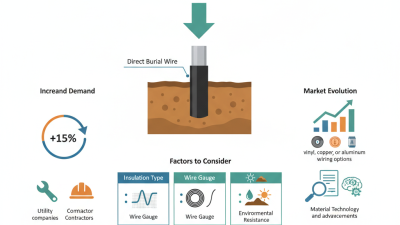
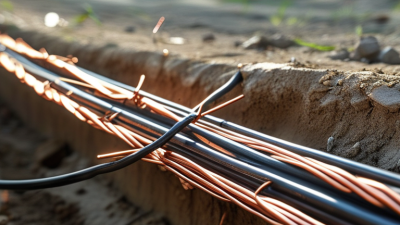
Choosing Direct Burial Wire in 2026 starts with the ground it must survive. Damp soil, rocky backfill, and seasonal temperature changes can challenge a cable’s insulation over time. The right choice depends on load, voltage, run length, conductor material, and the product’s marked use—not just its price. Check the cable’s listing and manufacturer instructions. Confirm installation details against current local requirements with a qualified electrician.
Small details matter. A long run to a garden shed may need a different conductor size than a short path to a gate. Soil can look dry in July and stay wet after autumn rain. Plan for that. Electrical educator Mike Holt is a respected safety reference, but I cannot verify a direct-burial-specific quotation from him, so I will not invent one. A practical field rule for this guide is: “Match the cable to the load, the route, and the soil.” It is not glamorous advice. It is useful advice.
This outline will explain direct-burial cable types, insulation markings, sizing, installation planning, and common buying mistakes. It will also distinguish direct burial from wiring methods that require a raceway, since the terms are not interchangeable. A careful check before purchase can prevent costly rework. Still, labels can be easy to misread, and a quick online chart may miss site conditions. Verify the details. Safety comes first.
Define the Load, Voltage, and Route Before Choosing Direct-Burial Wire
How to Choose Direct Burial Wire in 2026?
Define the Load, Voltage, and Route Before Choosing Direct-Burial Wire
Start with the equipment nameplate, not a guess based on wire size. Record its amperage, voltage, starting current, and required circuit protection. The U.S. Energy Information Administration reported average residential electricity use of about 10,791 kWh per customer in 2023. That annual average cannot size an individual circuit. A pump and a garden-lighting run have different demands. Check the actual load.
Distance matters. So does the route. The 2023 National Electrical Code recommends limiting voltage drop to 3% on a branch circuit, or 5% across feeder and branch circuits combined. These are informational recommendations, not universal guarantees. Calculate for the full one-way run and account for load current. IEEE Standard 835 describes ampacity calculations that consider installation conditions, including soil thermal properties. Wet soil, heat, grouping, and burial depth can change performance. Details matter.
Choose cable specifically marked for direct burial, then verify conductor material, insulation rating, and permitted use against local requirements. Map the route before buying: a long trench around a patio can alter both length and protection needs. Measure twice. A small oversight here can mean a noticeable voltage drop—or a costly re-dig. Have a qualified electrician verify the final conductor size and installation details.
Compare 600 V UF-B and USE-2 Cables for Wet-Location Use
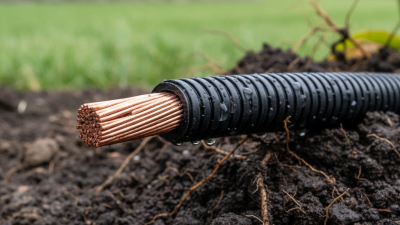
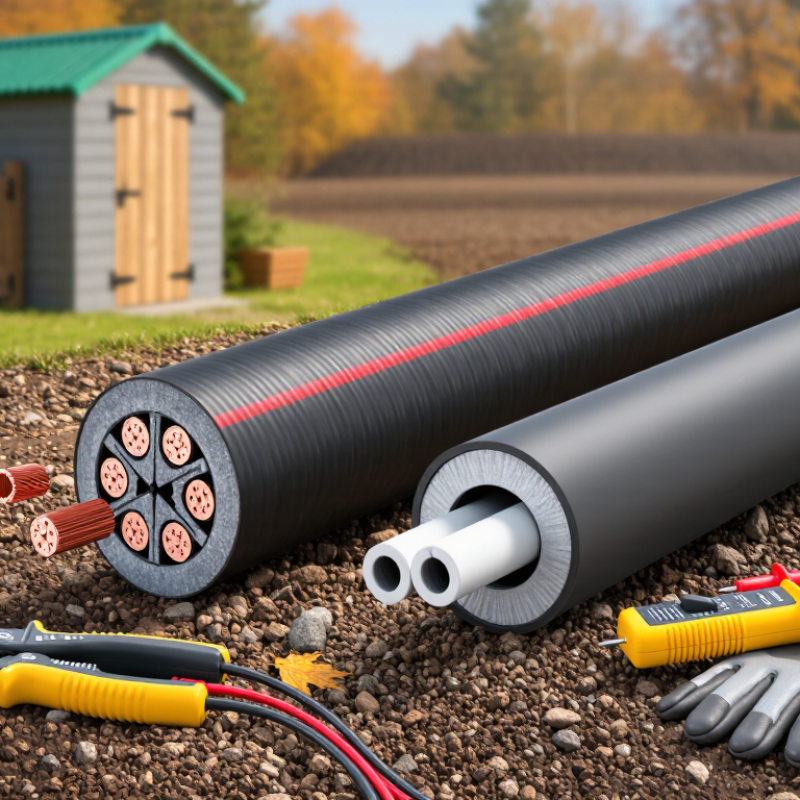
For a 600 V wet-location run, UF-B and USE-2 are not interchangeable. UF-B is a multi-conductor cable covered by UL 493 and commonly used for direct-buried branch circuits. Its outer jacket protects the insulated conductors, but confirm conductor size, grounding, and circuit load before buying. A garden trench can hold water after one storm.
USE-2, covered by UL 854, is typically a single-conductor cable for underground service-entrance applications. It is rated for wet locations, but that does not make every USE-2 cable suitable for indoor wiring; check its markings and installation instructions.
NFPA 70 (2023), Table 300.5, sets burial-cover requirements by wiring method and installation conditions, so there is no single safe depth for every yard. Check the local code, too. It can vary. Compare ampacity, voltage drop, termination ratings, and whether the route needs conduit.
On paper, USE-2 may look simpler. In practice, matching the cable to the full run matters more.
Size Conductors Using NEC Ampacity Rules for the Selected Cable
Before choosing a conductor size, identify the actual load and the direct-burial cable’s listing, conductor material, and insulation temperature rating. Direct-burial cable is considered to be in a wet location, so verify that its marking permits that use. Then consult the ampacity table and sizing rules in the NEC edition adopted for your project. Local requirements matter.
Apply the relevant load rules, including any continuous-load calculation, and account for ambient-temperature corrections or adjustments for multiple current-carrying conductors. The cable’s insulation rating does not automatically set the allowable ampacity; equipment terminal ratings can limit which table column applies. Check carefully. Also consider voltage drop on long runs: a conductor may satisfy ampacity rules yet cause a noticeable drop at a distant pump or shed. I still recheck the cable markings and breaker rating against the plan, because small assumptions can change the result. For uncertain loads, unusual soil or ambient conditions, or long buried runs, have a qualified electrician verify the calculation before installation.
How to Choose Direct Burial Wire in 2026
Copper conductor ampacity by AWG size for a UF-B cable example
The chart shows NEC Table 310.16 ampacity values for copper conductors at 60°C, 75°C, and 90°C, under the table’s stated conditions: 30°C ambient temperature and no more than three current-carrying conductors. For this UF-B example, use the 60°C column as the ampacity limit. Actual conductor sizing also depends on load, terminal ratings, adjustments, and applicable code requirements. Table ampacity is not necessarily the permitted overcurrent-device rating.
Check Minimum Cover and Raceway Rules in NEC Table 300.5
Choosing direct-burial wire starts with the cover depth, not the trench’s overall depth.
NEC Table 300.5 measures cover from the top of the cable or raceway to finished grade. NFPA 70, 2023 edition, lists
24 inches for direct-buried cable,
18 inches for qualifying nonmetallic raceways, and
6 inches for rigid metal conduit in common locations not subject to vehicle traffic. These are not interchangeable options. Wiring method, site conditions, and table footnotes can change the required cover.
Details matter.
A residential branch circuit rated 120 volts or less may qualify for
12 inches of cover when it has GFCI protection and overcurrent protection of 20 amperes maximum. Check that every condition is met before relying on this exception. A driveway, garden bed, or future patio can also change the practical risk, even when the table’s minimum is satisfied.
Small detail. Confirm the NEC edition adopted by your local authority, since adoption and amendments vary. Before digging, locate existing underground services, then measure from the finished surface to the wiring method’s top—not to the trench bottom.
A clean-looking trench can still be too shallow. When the route crosses a vehicle area or uses an unusual raceway, verify the applicable Table 300.5 column and footnotes with the inspector.
Keep Branch-Circuit Voltage Drop Within the NEC’s 3% Design Guideline
How to Choose Direct Burial Wire in 2026?
A direct-burial run can lose voltage over distance, even when its wire meets ampacity requirements. The NEC’s 3% branch-circuit voltage-drop figure is a design recommendation, not a universal mandatory limit. At 120 volts, 3% equals 3.6 volts; at 240 volts, it equals 7.2 volts. Check the applicable code edition and local requirements before choosing materials.
Measure the route from the supply to the load, then calculate voltage drop using the expected load and the full circuit path. For example, a long run to a garden pump may need larger conductors than a short run serving the same load. Don’t size wire by breaker rating alone. Confirm ampacity, conductor material, insulation rating, and any adjustments required for installation conditions.
Small detail. Big difference.
Choose cable or conductors specifically rated for the installation method, and follow required burial depth and protection rules. A larger conductor can reduce voltage drop, but it also affects cost and termination compatibility. I’ve found it easy to underestimate distance when a trench curves around trees or structures. Recheck the route and calculations before digging; one measurement can be wrong. If the load has a high starting current, such as a motor, include that in the design review. When calculations or local rules are unclear, ask a qualified electrician to verify the plan.