Hesheng Cable
Leave Your Message

7 Best IEC Cable Meaning Answers for Global Buyers

Iec Cable Meaning can seem obvious until a buyer compares a power cord, a connector, and a cable specification. IEC refers to the International Electrotechnical Commission, which publishes standards used across electrical and electronic equipment. In product listings, however, “IEC cable” is often shorthand rather than a complete technical description. The exact meaning depends on the connector, equipment inlet, rating, and intended use.

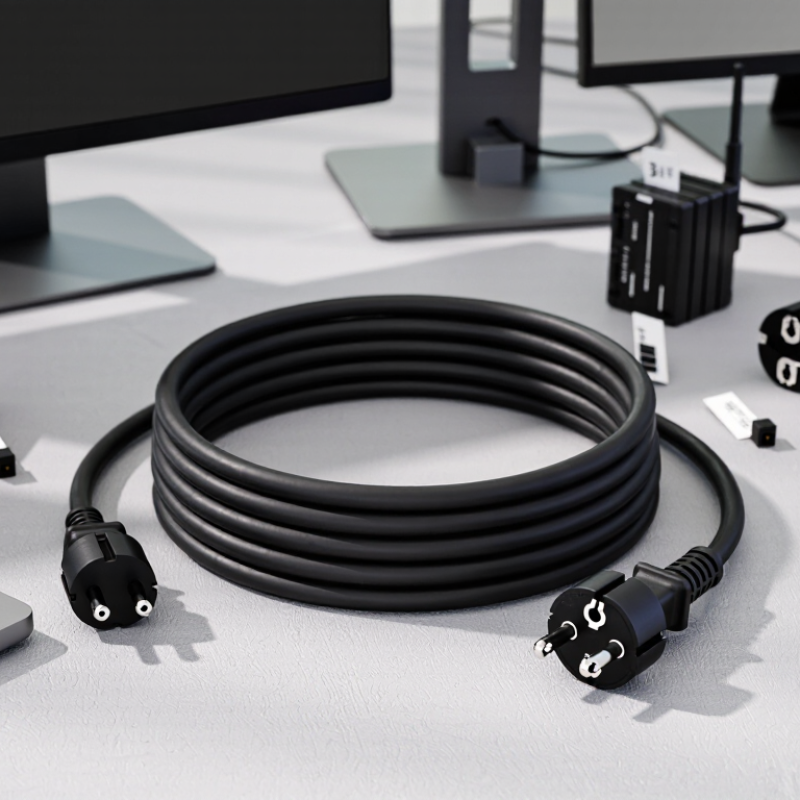
A familiar example is the removable power cord used with a desktop computer or monitor. One end may connect to a wall outlet, while the other fits an IEC appliance inlet. The shape matters. So do voltage, current, grounding, and regional plug requirements. A matching connector alone does not confirm that a cable suits a particular device. Check the equipment label and manufacturer documentation. Small details count.

This guide presents seven practical answers to common questions about IEC cable terminology. It explains how buyers can distinguish cable types, read basic ratings, and avoid relying on vague marketplace descriptions. The explanations are general; product requirements can vary. When a specification is unclear, verify it with the supplier or equipment maker before ordering. That extra check may feel slow, but it can prevent a costly mismatch. There is no single phrase that covers every IEC cable. That is worth remembering.
7 Best IEC Cable Meaning Answers for Global Buyers

What Does IEC Cable Mean in Global Electrical Standards?

7 Best IEC Cable Meaning Answers for Global Buyers

What does IEC cable mean? It does not describe one cable type. It means the cable is designed, tested, or specified against standards issued by the International Electrotechnical Commission. These standards may cover conductor construction, rated voltage, insulation, fire behavior, and testing methods. For example, IEC 60227 addresses certain PVC-insulated cables, while IEC 60502 covers power cables with extruded insulation. IEC 60332 evaluates flame propagation. The number matters.

Demand makes this distinction practical. The International Energy Agency’s Electricity 2024 report forecasts global electricity demand to grow by about 4% annually through 2026. IRENA’s Renewable Capacity Statistics 2024 recorded 473 GW of renewable capacity added in 2023. More projects mean more cable schedules, longer routes, and stricter installation checks. A buyer should match the IEC reference, voltage rating, conductor material, temperature range, sheath, and local approval requirements. A familiar IEC label is not enough.

Look beyond the printed mark. Request test reports, construction drawings, batch traceability, and clear declarations of conformity. Check whether the standard is current and whether the importing country has adopted extra rules. I have seen specifications copy an IEC number without defining fire performance or installation conditions. That creates confusion later. The cable may meet one test while failing the project’s real environment. Wet trenches, crowded trays, ultraviolet exposure, and tight bending spaces change the decision. Standards guide the purchase; engineering judgment completes it.
How IEC Cables Are Classified by Voltage, Use, and Construction

7 Best IEC Cable Meaning Answers for Global Buyers

IEC cable does not describe one universal product. It usually means a cable designed and tested under relevant International Electrotechnical Commission standards. Buyers should check the exact standard, voltage rating, conductor size, insulation, and installation method. A familiar label can still hide important differences.

Voltage classification is a practical starting point. Low-voltage cables commonly serve building power, control panels, and industrial equipment. Medium-voltage cables need stronger insulation, screening, and carefully controlled construction. The permitted voltage depends on the cable standard and operating environment. Never select a cable from voltage alone.

Use and construction reveal more detail. Power cables carry electrical energy, while control and instrumentation cables transmit commands or measurement signals. Data cables may require twisting, shielding, and impedance control. Construction can include copper or aluminium conductors, insulation layers, metallic screens, fillers, and outer sheaths. Armoured designs resist impact and crushing, especially in buried or exposed routes. Flexible cables use finer strands for repeated movement.

Small details matter. A cable for a fixed tray may fail in a moving machine. Heat, moisture, oil, ultraviolet exposure, and bending can change the correct choice. In field inspections, mismatched gland sizes and unclear markings cause avoidable delays. I have also seen buyers trust a voltage label without checking fire performance or conductor resistance. That shortcut deserves criticism. Reliable purchasing requires the full datasheet, test evidence, and installation conditions, not just the phrase “IEC cable.”

IEC Cable Classification by Voltage Range

IEC power cables are commonly grouped by their rated voltage and application. This chart shows representative voltage limits covered by IEC 60502-1, IEC 60502-2, IEC 60840, and IEC 62067. Actual cable selection also depends on insulation, conductor material, installation method, fire performance, and environmental conditions.

Which IEC Cable Types Suit Industrial and Commercial Applications?

7 Best IEC Cable Meaning Answers for Global Buyers: Which IEC Cable Types Suit Industrial and Commercial Applications?

IEC cable selection depends on voltage, movement, heat, moisture, and fire exposure. IEC 60502-1 cables suit fixed low-voltage power distribution, including factories, offices, and retail buildings. IEC 60227 PVC cables work well in dry indoor wiring and control circuits. They are economical, but not universal.

Industrial sites often need tougher insulation. IEC 60245 rubber cables handle flexible equipment, vibration, and harsher working areas. Medium-voltage systems may require IEC 60502-2 cables, while high-voltage networks follow IEC 60840 or IEC 62067. IEC 60332 flame tests matter in crowded buildings, tunnels, and production areas. In practical inspections, cable identification, bending space, and gland compatibility cause as many problems as conductor sizing. A perfect specification can still fail during installation.

The International Energy Agency reported in Electricity Grids and Secure Energy Transitions that more than 80 million kilometres of grids may need to be added or replaced globally by 2040. That pressure increases demand for verified cable performance, not simply lower prices. Buyers should request test reports, conductor material details, voltage ratings, and installation temperature limits. IEC standards help, but local codes still control final approval.

Tips: Match the cable to its environment first. Check fire, oil, water, movement, and sunlight exposure. Leave realistic bending space. Do not trust a familiar cable name alone.

How to Read IEC Cable Markings, Ratings, and Certification Codes

Reading an IEC cable marking starts with the standard number, not the product name. IEC 60502-1 commonly covers power cables with extruded insulation for fixed installations. IEC 60227 addresses PVC-insulated cables for rated voltages up to 450/750 V.

Check the printed voltage, such as 300/500 V or 0.6/1 kV. The notation U0/U shows conductor-to-earth and conductor-to-conductor voltage.

Conductor size appears in square millimetres, while “Cu” or “Al” identifies the metal. Do not confuse IEC with a certification agency. IEC publishes standards; independent laboratories verify compliance.

Safety codes require closer reading. IEC 60332 indicates flame-propagation testing, but the exact part matters. IEC 60754 concerns halogen-acid gas emissions, and IEC 61034 addresses smoke density. A low-smoke claim needs the correct test reference.

In practical inspections, I have found that buyers often check only the voltage and cross-section. That is not enough. A cable may pass one test and fail another.

The International Energy Agency’s Electricity 2024 report projects global electricity demand to grow by an average 3.4% annually through 2026, increasing pressure for dependable infrastructure.

Mark the installation temperature, bending radius, and ambient conditions before approval. Certification paperwork should match the printed construction, test edition, and manufacturing batch.

Labels can still be unclear. When evidence is incomplete, pause the purchase and request the laboratory report.

What Global Buyers Should Check Before Choosing IEC Cables

IEC cable meaning goes beyond a familiar label on a product sheet. Global buyers should verify the exact IEC standard, cable type, voltage rating, conductor material, insulation, and temperature range. A cable for indoor equipment may fail in sunlight, moisture, vibration, or industrial heat. Do not guess.

Ask for clear technical documents, including test reports, material specifications, drawings, and traceability records. Reliable suppliers should identify the production batch and explain how routine tests are performed. Check conductor size carefully. A thicker-looking cable is not always electrically safer. That detail matters.

Compatibility also deserves close attention. Confirm the connector, current capacity, bending radius, shielding, and installation space before ordering. Small errors spread. I have seen projects delayed because the cable matched the standard but not the equipment socket. Packaging and labeling should remain readable after transport. Samples can reveal stiffness, jacket quality, and marking accuracy, but one sample cannot prove long-term performance. Buyers should compare documented results with actual operating conditions and question vague claims. It is tempting to choose the lowest quotation, yet missing test evidence may create higher replacement and downtime costs. An honest review should admit that no checklist removes every risk. Cheerful paperwork is not enough.