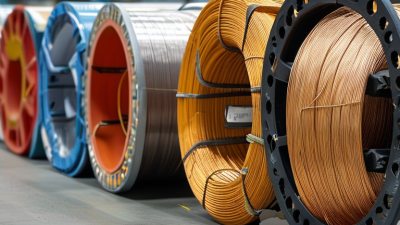
China’s wire industry serves construction, equipment, energy, automotive, and industrial control markets worldwide. Among its many products, Four Core Wire remains a practical choice for systems needing organized power or signal transmission. Its four conductors can support balanced circuit layouts, clearer identification, and easier maintenance. However, product performance depends on more than conductor count.
This guide examines ten Chinese Four Core Wire manufacturers that buyers may consider. The selection focuses on manufacturing experience, copper quality, insulation materials, production capacity, testing procedures, and export reliability. A dependable supplier should provide clear specifications, including conductor size, voltage rating, temperature range, insulation type, and applicable standards. Factory audits, sample testing, and traceable documentation also deserve attention. Small details matter.
Some manufacturers may appear impressive online but offer limited technical evidence. That is a warning sign. Buyers should request recent test reports, production photographs, packaging details, and sample lengths before placing large orders. Communication quality also reveals practical competence. A supplier that answers technical questions precisely is usually easier to manage after purchase.
This ranking is not a substitute for independent verification. Market conditions change, product lines evolve, and public information can remain incomplete. I may overlook smaller factories with strong regional capabilities. Therefore, readers should compare quotations, inspect samples, and confirm compliance with their destination market’s requirements. The goal is simple: identify capable manufacturers and reduce avoidable purchasing risks.
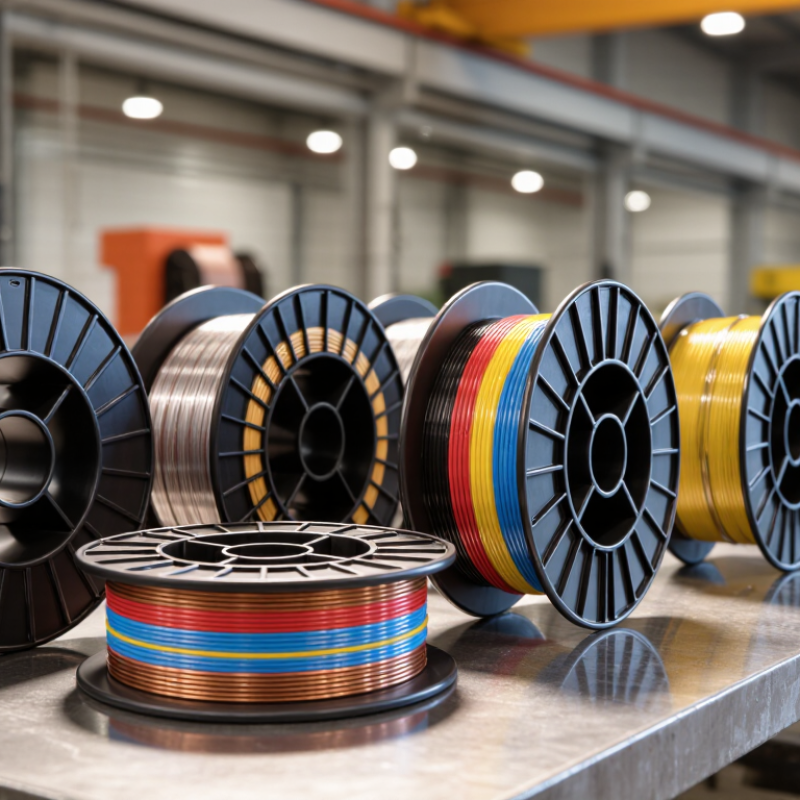
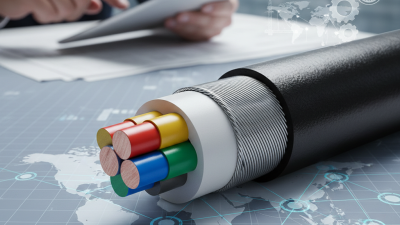
Four-core wire contains four insulated conductors inside one protective outer jacket. Each core carries current, control signals, or grounding functions, depending on the system design. Common arrangements include three power conductors and one earth conductor. Others use two power cores and two control cores. The correct layout must be confirmed before installation.
This cable is used in industrial machinery, control cabinets, elevators, pumps, sensors, and building services. It can reduce clutter where several separate wires would otherwise run together. In a workshop, a four-core cable may connect a motor with a control panel. In a building, it may support lighting controls or low-voltage equipment. The environment matters. Outdoor routes need stronger jackets and resistance to moisture, sunlight, and temperature changes.
Selection should consider conductor size, voltage rating, insulation material, flexibility, bending radius, and current load. Copper usually provides reliable conductivity, but the final choice depends on the application and local requirements. Check the color code and terminal markings carefully. A small wiring error can damage equipment or create a serious shock risk. Professional installers test continuity, insulation resistance, and grounding before energizing the circuit. Cable labels can fade over time, so clear records are useful. I have seen neat installations become confusing after one unmarked repair. That detail is easy to overlook. Local electrical rules and a qualified inspection should guide the final installation.
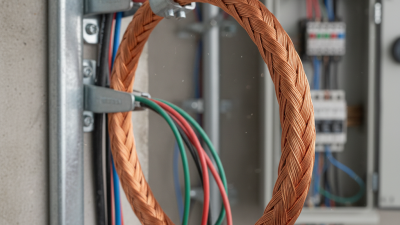
Evaluating four-core wire manufacturers in China requires more than comparing prices. The IEA’s Electricity Grids and Secure Energy Transitions report estimates that annual grid investment must increase by about 50% by 2030. This pressure makes stable cable quality increasingly important.
Check whether the manufacturer follows IEC 60228 for conductor resistance and construction. Request test records for cross-sectional area, insulation thickness, voltage withstand, and aging performance. A reliable supplier should provide traceable batch numbers, calibrated equipment records, and samples from current production. I would also compare copper purity and conductor flexibility, not only the printed specifications. Small differences can affect installation time.
Factory experience matters. Ask to inspect stranding lines, extrusion controls, spark testers, and final packaging. The International Copper Study Group regularly reports strong long-term copper demand from power infrastructure, but material cost changes can encourage substitutions. That risk deserves direct questioning. A polished factory tour can still hide weak traceability. Require an independent pre-shipment inspection when the order is significant.
Evaluate delivery history through verifiable customer references and export documentation. Review corrective-action records, rather than accepting only certificates. ISO 9001 certification supports process control, but it does not guarantee every batch. This is where buyers often become overconfident. Compare at least three factories using the same technical specification, inspection plan, warranty terms, and payment conditions. A lower quotation may reflect thinner insulation, weaker testing, or unclear copper sourcing.
Anonymized supplier comparison based on commonly verifiable four-core wire purchasing criteria
| Rank | Anonymized Manufacturer | Main Production Region | Typical Four-Core Products | Conductor Options | Applicable Standards | Quality Evidence to Request | Customization | Typical MOQ Band | Indicative Lead-Time Band | Evaluation Score |
|---|---|---|---|---|---|---|---|---|---|---|
| 1 | Manufacturer 01 | East China | PVC insulated control cable; flexible equipment wire | Bare or tinned copper; Class 2 or Class 5 | IEC 60228; IEC 60502-1 where applicable; RoHS | Conductor resistance report, dimensional report, voltage test record | High | 500–1,000 m | 15–25 days | 92/100 |
| 2 | Manufacturer 02 | Central China | XLPE insulated power cable; industrial power leads | Copper or aluminium; solid, stranded, or compacted | IEC 60228; IEC 60502-1; REACH/RoHS documentation | Routine test report, insulation resistance results, material declarations | High | 1,000–3,000 m | 20–30 days | 90/100 |
| 3 | Manufacturer 03 | South China | Multi-core flexible cable; instrumentation and control cable | Fine-stranded copper; optional shielding and drain wire | IEC 60228; IEC 60332-1-2; RoHS | Flame-retardancy test, flexibility test, conductor lay-up record | Very high | 300–800 m | 18–28 days | 89/100 |
| 4 | Manufacturer 04 | North China | Low-voltage four-core power cable; outdoor cable assemblies | Copper or aluminium; PVC, XLPE, and PE sheath options | IEC 60502-1; IEC 60228; UV and environmental specifications by design | Type-test certificate, sheath test, UV or weathering test when specified | Medium-high | 1,000–5,000 m | 25–35 days | 87/100 |
| 5 | Manufacturer 05 | East China | Halogen-free low-smoke cable; building and public-area wiring | Copper Class 2 or Class 5; LSZH compound options | IEC 60228; IEC 60754; IEC 61034; IEC 60332 series | Halogen-acid gas test, smoke-density test, flame test, batch traceability | High | 500–2,000 m | 25–40 days | 86/100 |
| 6 | Manufacturer 06 | Southwest China | Automotive and battery-system multi-core cable | Flexible copper; high-temperature and abrasion-resistant insulation | IEC 60228; ISO 6722 or customer-specific automotive requirements | Temperature-cycle test, abrasion test, spark test, PPAP-style records | Very high | 200–1,000 m | 30–45 days | 84/100 |
| 7 | Manufacturer 07 | Central China | Solar and renewable-energy four-core cable | Tinned copper; UV-resistant, outdoor-rated insulation and sheath | IEC 60228; IEC 62930 or EN 50618 where specified; RoHS | UV-aging test, water-resistance test, insulation resistance, dimensional report | High | 500–2,000 m | 20–35 days | 83/100 |
| 8 | Manufacturer 08 | South China | Marine and oil-resistant control cable | Tinned copper; oil-resistant PVC, PUR, or special elastomer jackets | IEC 60228; IEC 60092 or project-specific marine standards | Oil-resistance test, water-blocking test, flame test, inspection plan | High | 300–1,500 m | 30–45 days | 81/100 |
| 9 | Manufacturer 09 | North China | Data, communication, and low-voltage signal cable | Copper conductors; twisted pairs, shielding, and drain-wire options | IEC 60228; IEC 60332-1-2; EMC requirements by application | Impedance report, shielding coverage, attenuation test, continuity test | Very high | 300–1,000 m | 20–35 days | 80/100 |
| 10 | Manufacturer 10 | East China | General-purpose four-core appliance and machinery wire | Bare copper; PVC or flexible PVC insulation | IEC 60228; IEC 60332-1-2; RoHS where required | Raw-material certificate, conductor resistance, insulation and spark-test records | Medium | 500–3,000 m | 15–30 days | 78/100 |
China’s Top 10 Four-Core Wire Manufacturers serve construction, control systems, industrial equipment, and low-voltage installations. Their product ranges often include copper or aluminum conductors, PVC or XLPE insulation, and flexible or fixed-installation designs. Buyers should compare conductor size, insulation thickness, voltage rating, temperature range, and resistance values before choosing a supplier.
A reliable manufacturer should provide factory certificates, batch test reports, material declarations, and clear production records. During supplier checks, request samples from different production dates. Measure the conductor diameter, bend the cable repeatedly, and inspect the insulation for cracks or uneven surfaces. These small checks reveal more than polished catalog images. Ask about minimum order quantities, delivery schedules, packaging, and custom printing. Practical communication matters.
The strongest candidates usually maintain stable extrusion lines, controlled copper sourcing, and documented quality inspections. Some factories may offer impressive prices but limited traceability. That risk deserves attention. No ranking is flawless. A supplier that fits one project may fail another because cable flexibility, outdoor exposure, and installation space differ. Buyers should also confirm applicable Chinese and international standards with an independent engineer. In my experience, careful sample testing prevents expensive replacement work later. Cheap cable can become costly.
Four-core wire serves power distribution, industrial machinery, construction, and charging equipment. Common products use copper or aluminum conductors, with PVC or XLPE insulation. Copper offers better conductivity and flexibility. Aluminum reduces weight and material cost. Armored designs add mechanical protection, especially in buried or factory installations.
Technical compliance should guide purchasing decisions. IEC 60228 defines conductor classes, resistance, and construction requirements. IEC 60502-1 covers power cables with extruded insulation for rated voltages up to 3 kV. Buyers should also check IEC 60332 flame testing and IEC 60754 requirements for halogen gases. The IEA’s Global EV Outlook 2024 recorded almost 14 million electric car sales in 2023. This growth increases demand for reliable multi-core wiring in charging systems and distribution panels. However, charging loads vary widely. A four-core cable is not automatically suitable for every installation.
Tips: Confirm voltage, ampacity, conductor class, insulation temperature, and bending radius. Ask for test reports, not only certificates. Check correction factors for grouped cables, ambient heat, and installation depth. A practical mistake is selecting by cross-sectional area alone. I have seen apparently suitable cables run hotter than expected because ventilation and grouping were ignored. Local wiring rules may also differ from IEC guidance, so technical review remains necessary.
Choosing the Right Chinese Four-Core Wire Manufacturer
Buying four-core wire from China requires more than comparing quotations. Start with the technical sheet: conductor material, cross-sectional area, insulation type, voltage rating, temperature range, and intended application. Ask for drawings, production photos, and recent test records. A reliable manufacturer should explain these details clearly, not hide behind a low price.
Request samples from the same production line used for mass orders. Check conductor flexibility, insulation thickness, color consistency, printing accuracy, and drum packaging. Independent laboratory testing can verify electrical resistance, flame performance, and dimensional tolerances. Factory audits also matter. Review equipment maintenance, raw-material storage, worker training, and batch traceability. A clean showroom means little if the warehouse is poorly controlled.
Discuss minimum order quantities, lead times, payment stages, inspection rights, and shipping terms before signing. Put every specification into the purchase contract. A pre-shipment inspection can catch uneven insulation or incorrect labeling before the cargo leaves China. I have seen buyers focus heavily on price and overlook packaging damage during inland transport. That mistake becomes expensive. I also prefer video calls with production managers, although communication can still be imperfect. Ask the same question twice when the answer sounds vague. Keep written records of every change, even small ones. The cheapest offer is not always the safest purchase.
This chart shows the maximum DC resistance at 20°C for copper conductors commonly used in four-core cables, based on IEC 60228 Class 2 reference values. Lower resistance generally indicates lower power loss, but final purchasing decisions should also verify insulation, voltage rating, temperature rating, mechanical performance, testing, and certification requirements.