China Top 10 Electrical Cable Standards for Global Buyers?
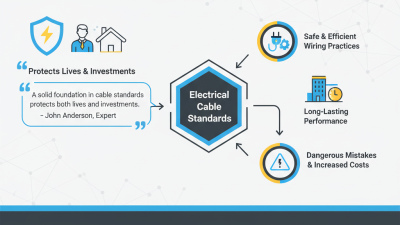
In today’s global market, understanding Electrical Cable Standards is crucial for buyers. Electrical cables are vital for various industries, including construction, telecommunications, and manufacturing. According to the International Electrotechnical Commission (IEC), adherence to established standards ensures safety and efficiency in electrical systems.
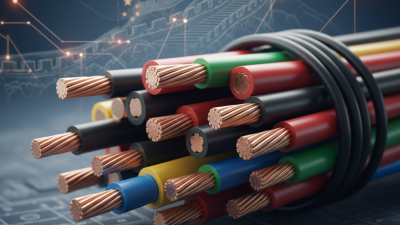
China's electrical cable standards are particularly important as the country holds a significant position in global manufacturing. In 2021 alone, China produced over 100 billion meters of electrical cables, highlighting the scale of its industry. However, navigating the numerous standards can be challenging for international buyers. They must ensure compliance with local regulations and quality benchmarks.
Buyers often overlook the importance of standard certifications. The lack of thorough understanding could lead to inefficient or unsafe installations. This negligence could result in financial losses or product failures. Therefore, it is essential to familiarize oneself with the top 10 electrical cable standards from China. Such knowledge can empower buyers to make informed decisions in a competitive market.
Understanding China's Cable Standards: An Overview for Global Buyers
China is a key player in the global electrical cable market. Understanding its standards is essential for buyers. China's cable standards, such as GB, are crucial benchmarks. These regulations ensure safety, quality, and compatibility. According to recent industry reports, over 30% of global cable consumption comes from China.
Compliance with these standards helps mitigate risks. Buyers should note that not all manufacturers adhere strictly. Quality can vary significantly. A 2022 study revealed that around 15% of imported cables failed basic safety tests. This highlights the need for thorough evaluations prior to purchase.
Different regions within China also follow specific guidelines. For instance, the standards in Guangdong may differ from those in Sichuan. Buyers must navigate this complexity. Emphasizing local compliance can enhance supply chain efficiency. Cable standards can act as a guide but need personal verification. Relying solely on labels may not suffice.
China Top 10 Electrical Cable Standards for Global Buyers
| Standard Code |
Standard Name |
Description |
Application |
| GB/T 12706 |
Power Cables |
Standards for electric power cables with rated voltage up to 35 kV. |
Power transmission |
| GB/T 19666 |
Control Cables |
Cables for control circuits with specific construction and performance requirements. |
Industrial machinery |
| GB/T 5023 |
PVC Insulated Cables |
Standards for PVC insulated wires and cables. |
Residential and commercial use |
| GB/T 16188 |
Mining Cables |
Standards for cables used in mines, ensuring safety and performance. |
Mining and tunneling |
| GB/T 12706.2 |
Low-voltage Cables |
Specifications for low-voltage cables for various applications. |
Commercial and residential |
| GB/T 2900 |
Electrical Terminology |
General electrical terminology relevant to cable specifications. |
General reference |
| GB/T 50057 |
Fire Safety Cables |
Standards for fire-resistant cables. |
Fire safety systems |
| GB/T 11017 |
Flexible Cables |
Specifications for flexible cables used in various applications. |
Mobile and transportable machinery |
| GB/T 14049 |
Thermal Cables |
Requirements for cables rated for high-temperature environments. |
Industrial applications |
| GB 5760 |
Rubber Insulated Cables |
Standards for rubber insulated electrical wires and cables. |
Heavy-duty applications |
Key International Wire and Cable Standards Relevant to China
When navigating the electrical cable market in China, understanding key international standards is crucial. Standards like
IEC 60227 for PVC insulated cables and IEC 60502 for power cables play an essential role.
These guidelines ensure safety, efficiency, and reliability in cable manufacturing. Adhering to these standards helps buyers
assess the quality of products.
Tips: Always request documentation that verifies compliance with international standards. This can save time and resources.
In addition to IEC standards, domestic standards such as GB/T 19666 for low-voltage cables are important.
These standards set specific requirements for cable performance and safety. Manufacturers are often required to meet
both international and local standards to compete in the global market. Lack of awareness can lead to costly mistakes.
Tips: Familiarize yourself with both sets of standards. This knowledge can enhance your negotiation skills with suppliers.
China’s rapid industrial growth means that standards can evolve. Keeping abreast of changes is essential for buyers.
Regular updates from official sources can enhance your purchasing strategies. Remember to reassess suppliers periodically
for compliance. Compliance is a continual process.
Top 10 Chinese Electrical Cable Standards: Specifications and Compliance
In recent years, China's electrical cable standards have gained significant attention from global buyers. Understanding these standards is crucial for compliance and safety. For instance, the GB/T 12706 is a primary standard that specifies cross-linked polyethylene cables. It ensures that these cables can withstand environmental stresses, such as heat and moisture, which enhances durability.
The adoption of national standards like GB/T 19666 for rubber-insulated cables is also noteworthy. This standard focuses on quality and safety. According to industry reports, approximately 30% of electrical cable failures are attributed to poor insulation. Compliance with such standards can minimize risks and improve the reliability of electrical systems.
However, the landscape is not without challenges. Local variations in standards can create confusion among international buyers. Some manufacturers may not fully comply with specified standards. This inconsistency raises concerns about the true quality of products in the market. Buyers should not only look for certifications but also conduct thorough audits of suppliers. Ensuring adherence to relevant standards is vital for long-term operational success and safety.
Market Impact of China's Cable Standards on Global Electric Industry
China’s electrical cable standards significantly influence the global electric industry. A recent report by the International Electrotechnical Commission (IEC) indicates that approximately 40% of global cable production is aligned with Chinese standards. This trend affects pricing and supply chains worldwide. In fact, adherence to these standards can reduce production costs by 15%, according to the Global Cable Manufacturers Association.
These standards also create challenges for compliance. Many international buyers encounter difficulties understanding and adapting to China’s complex regulations. A survey from the Cable Industry Insights revealed that 30% of foreign buyers report confusion regarding safety certifications. This gap can limit market entry for companies unprepared for the stringent requirements set by Chinese authorities.
Looking ahead, the evolving standards may reshape competitive dynamics. The adoption of green technologies and sustainable practices in electrical cable production is gaining momentum. Projections indicate that eco-friendly cable options could capture 25% of the market by 2025. However, this transition requires investment and adaptation, presenting hurdles for many manufacturers. The interconnectedness of global supply chains means that changes in China can ripple out, influencing standards and practices across various regions.
Future Trends in Chinese Electrical Cable Regulations and Standards
The landscape of electrical cable standards in China is evolving. Recent regulations emphasize safety, efficiency, and environmental sustainability. These changes aim to align with global practices. Buyers can expect stricter quality controls and performance benchmarks. Various standards might influence the safety features of electrical cables.
As the demand for renewable energy grows, cable standards will also prioritize eco-friendly materials. Energy efficiency ratings are becoming more critical in specifications. Manufacturers may need to invest in advanced technologies to meet these new benchmarks. However, navigating these changes could be challenging for some.
The certification process is often complex and may require continuous updates. Stakeholders should stay informed about these developments. Collaboration between local and international bodies will be essential for standard improvement. This dynamic environment presents opportunities for growth, but it also calls for vigilance. Buyers should adapt swiftly to these trends to ensure compliance and reliability.