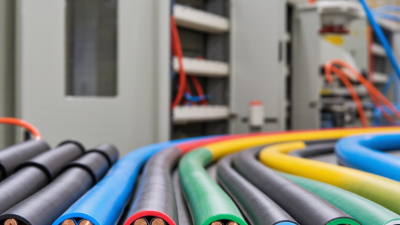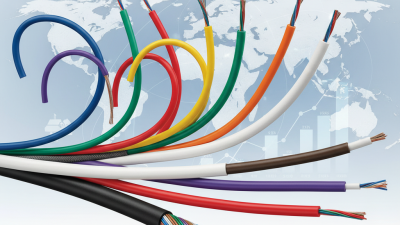
Global sourcing Flexible Cable Wire is not simply a price comparison. It is a technical decision involving movement, heat, bending radius, insulation, shielding, and installation conditions. A cable that performs well beside a quiet control cabinet may fail inside a constantly moving machine. Small details matter: copper strand count, jacket softness, connector stress, and the number of bending cycles.
W. Edwards Deming, a leading manufacturing quality authority, said, “Quality comes not from inspection, but from the improvement of the production process.” His principle applies strongly to cable sourcing. Reliable buyers examine production controls, material traceability, test records, and supplier consistency before approving a sample. A polished datasheet is not enough.
This guide reviews ten Flexible Cable Wire types used across automation, robotics, medical equipment, energy systems, and industrial controls. Each type has practical strengths and limitations. PVC may reduce cost, while PUR often handles abrasion better. Silicone remains flexible in demanding temperatures, but it may require greater protection from mechanical damage. Shielded constructions can reduce signal interference, yet they may increase diameter and cost.
The difficult part is choosing what the application truly needs. I have seen specifications become excessive because nobody defined the actual motion profile. That is wasteful. I have also seen low-cost cable fail after repeated bending. That mistake is expensive.
The following comparison focuses on construction, performance, sourcing risks, and suitable applications. It is not a substitute for testing. Real equipment can behave differently. Better decisions begin with honest requirements, measurable evidence, and a willingness to question familiar choices.
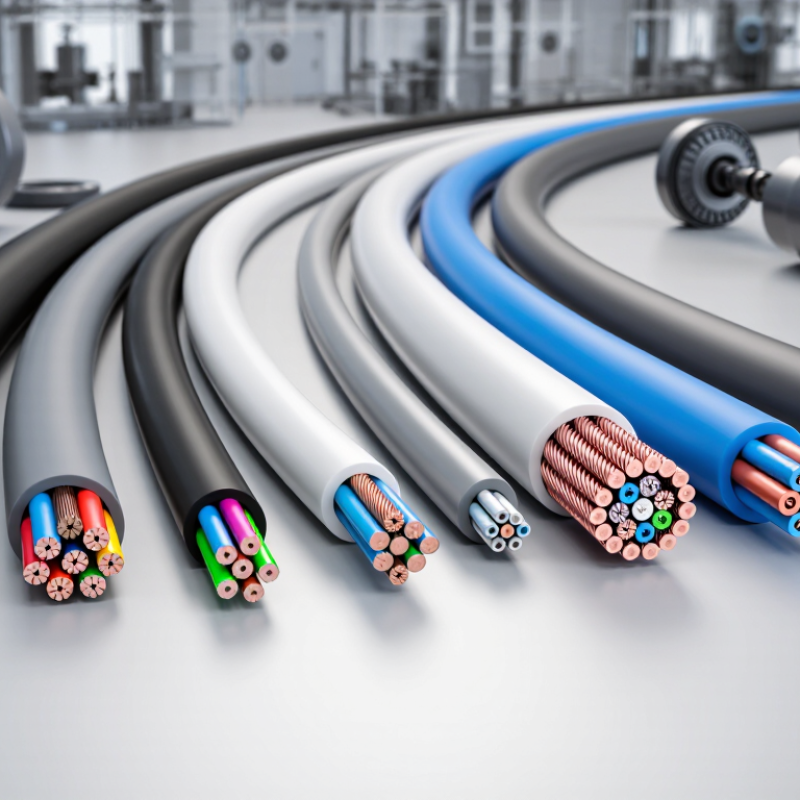
Flexible cable wire selection starts with construction, not appearance. Fine-stranded copper wires bend easily because their conductors contain many small strands. Extra-fine stranded wires handle repeated movement better, especially in robotics and portable equipment. Tinsel conductors offer excellent flex life, but they suit low-current applications. Flat ribbon cables save space and bend along one planned axis. Twisted-pair cables reduce signal interference while remaining reasonably flexible.
Construction changes performance. Coaxial cables combine a central conductor, insulation, shielding, and an outer jacket. They protect high-frequency signals, though excessive bending can damage impedance control. Shielded multi-core cables support power and signal transmission in crowded machinery. Spiral retractile cables extend and return neatly, but their usable length needs careful testing. Silicone-jacketed cables stay soft across wide temperature ranges. PUR-jacketed cables resist abrasion and oil better in industrial environments.
Flexibility is never a single specification. Bend radius, moving cycles, conductor size, shielding, jacket material, and temperature must be checked together. In sourcing projects, I compare the stated bend radius with real routing space and motion speed. A cable may pass a static bend test yet fail after thousands of cycles. That detail is easy to miss. One imperfect assumption remains common: thinner does not always mean more flexible. Request construction drawings, test reports, and sample cables before approving volume production.
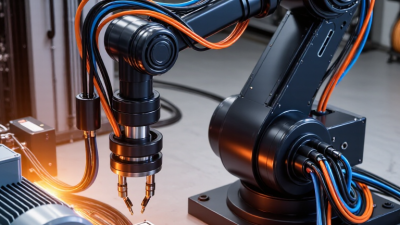
Global sourcing requires more than comparing prices. Flexible cable selection should match movement, temperature, voltage, and installation conditions.
The ten practical types include PVC hook-up wire, silicone wire, TPE cable, PUR drag-chain cable, rubber power cable, XLPE flexible cable, shielded control cable, flat ribbon cable, spiral cable, and welding cable.
PVC wire suits compact internal connections and moderate temperatures. Silicone handles heat and repeated bending better.
PUR performs well in moving machinery and oil-exposed areas.
Each cable type has a different sourcing risk. Drag-chain cables need verified bending-radius data, not vague claims about flexibility.
Shielded control cables can reduce electrical noise near motors and sensors. Flat ribbon cables save space inside panels, while spiral cables support retractable equipment.
Welding cables require fine-stranded conductors and durable insulation for heavy current.
A cheaper cable may fail early when its jacket hardens in cold storage. That lesson is easy to overlook.
Request conductor size, strand construction, insulation material, voltage rating, temperature range, bending radius, and test reports.
Check whether certificates match the actual production model. Ask for samples before placing bulk orders. Confirm sheath markings and packaging details.
Do not rely on a catalog image alone. I have seen specifications look complete, yet omit flex-cycle testing. That gap deserves a second review.
Selecting flexible cable wire for global sourcing requires more than comparing price and conductor size. The common choices include PVC, TPE, PUR, silicone, rubber, XLPE, FEP, PTFE, shielded cable, and braided cable. Each type suits a different working condition. PVC is economical for general equipment. PUR resists abrasion and repeated movement. Silicone stays flexible in wide temperature ranges. PTFE handles heat and chemicals, but it usually costs more. I have seen buyers choose by appearance alone. That approach often fails.
Electrical specifications should state conductor material, cross-sectional area, rated voltage, current capacity, insulation resistance, and dielectric strength. Signal cables also need controlled impedance, low capacitance, and effective shielding. Shield coverage should be verified through test records, not sales descriptions. Mechanical data matters equally. Check minimum bend radius, flexing cycles, tensile strength, torsion performance, and jacket abrasion resistance. A cable may bend easily by hand yet fail inside a moving chain.
Environmental requirements can change the entire specification. Confirm operating temperature, oil exposure, moisture, ultraviolet radiation, flame behavior, and chemical contact. For outdoor assemblies, inspect water resistance and sealing details. For clean production areas, select low-particle and low-emission materials when required. Request batch traceability, dimensional reports, material declarations, and independent test evidence. Do not accept “global standard” as a complete specification. Ask which standard, which test method, and which version. Measure twice. Small oversights in cable length, connector strain relief, or bend radius can create expensive field failures.
| Cable / Wire Type | Typical Conductor | Typical Voltage Rating | Operating Temperature | Minimum Dynamic Bend Radius | Flexing / Mechanical Performance | Environmental Resistance | Common Applications | Common Reference Standards |
|---|---|---|---|---|---|---|---|---|
| Flexible PVC Control Cable | Class 5 stranded annealed copper | 300/500 V or 450/750 V | Approximately -5°C to +70°C | About 6–8 × cable outside diameter | Good repeated flexing for stationary-to-moving industrial wiring; not intended for severe continuous drag-chain duty unless specifically designed for it | Good resistance to moisture, abrasion, and common industrial oils; limited high-temperature and low-temperature performance | Control panels, machinery, conveyors, sensors, and general industrial automation | IEC 60227, IEC 60332, EN 50525 |
| PUR Drag-Chain Cable | Extra-fine stranded tinned or bare copper | 300/500 V to 600/1000 V | Approximately -40°C to +90°C | Typically 5–7.5 × cable outside diameter | Excellent continuous flexing, torsion, abrasion resistance, and long travel performance | Very good resistance to oils, coolants, abrasion, hydrolysis, and weathering | CNC machines, robotic systems, cable carriers, automated production lines, and mobile equipment | IEC 60228, IEC 60332, EN 50525, UL 758 where applicable |
| TPE Flexible Cable | Fine-stranded annealed copper | 300/500 V or 600 V | Approximately -40°C to +105°C | Typically 5–7.5 × cable outside diameter | High flexibility with good fatigue life; formulation-dependent performance in continuous motion | Good resistance to moisture, ozone, UV radiation, and selected chemicals | Robotics, medical equipment, portable machinery, automation systems, and outdoor moving assemblies | IEC 60228, IEC 60332, EN 50525 |
| Silicone-Insulated Flexible Wire | Fine-stranded tinned copper | 300/500 V or 600 V | Approximately -60°C to +180°C | Typically 4–6 × wire or cable outside diameter | Extremely flexible and resistant to thermal cycling; comparatively lower cut and abrasion resistance than PUR | Excellent temperature, ozone, and weather resistance; may swell in some oils and solvents | Heating equipment, appliances, lighting, high-temperature machinery, and electrical cabinets | IEC 60245, IEC 60332, EN 50525 |
| EPDM Rubber Flexible Power Cable | Class 5 flexible copper conductor | 450/750 V | Approximately -25°C to +60°C ambient; conductor operating temperature commonly up to +90°C | Typically 6 × cable outside diameter | Strong flexibility, impact resistance, and suitability for temporary or mobile power service | Very good resistance to water, ozone, sunlight, and outdoor exposure; oil resistance varies by compound | Construction equipment, agricultural machinery, outdoor tools, generators, and temporary power distribution | IEC 60245-4, EN 50525, IEC 60332 |
| XLPE-Insulated Flexible Power Cable | Class 5 stranded copper or compacted copper | 0.6/1 kV | Approximately -40°C to +90°C conductor operating temperature | Typically 8 × cable outside diameter | Good electrical performance and heat resistance; flexibility depends on conductor class and sheath construction | Good resistance to moisture, abrasion, and many chemicals; suitable for higher continuous operating temperatures than PVC | Industrial power distribution, motors, renewable-energy equipment, and fixed or occasionally moved installations | IEC 60502-1, IEC 60228, IEC 60332 |
| PTFE-Insulated High-Temperature Wire | Silver-plated or nickel-plated stranded copper | 300/500 V to 600 V | Approximately -65°C to +200°C | Typically 4–6 × wire or cable outside diameter | Good flexibility and dimensional stability; insulation can be damaged by sharp mechanical abuse | Excellent resistance to heat, chemicals, solvents, moisture, and low-temperature exposure | Aerospace equipment, laboratory instruments, heaters, sensors, and high-temperature control systems | IEC 60228, IEC 60332, applicable aerospace or appliance wire specifications |
| FEP-Insulated Flexible Wire | Stranded tinned, silver-plated, or nickel-plated copper | 300/500 V to 600 V | Approximately -65°C to +200°C | Typically 4–6 × wire or cable outside diameter | Small insulation wall and good flexibility; suitable where compact routing is important | Excellent resistance to chemicals, oils, moisture, flame, and high-temperature environments | Chemical processing, analytical instruments, lighting, high-temperature sensors, and compact control assemblies | IEC 60228, IEC 60332, applicable appliance and equipment wire specifications |
| ETFE-Insulated Flexible Wire | Silver-plated or nickel-plated stranded copper | 300/500 V to 600 V | Approximately -65°C to +150°C | Typically 4–6 × wire or cable outside diameter | Thin-wall, lightweight construction with good abrasion and cut resistance | Very good resistance to chemicals, fuels, radiation, moisture, and abrasion | Aerospace, transportation, robotics, instrumentation, and weight-sensitive control systems | IEC 60228, IEC 60332, applicable aerospace and equipment-wire specifications |
| Shielded Flexible Instrumentation Cable | Fine-stranded copper pairs or triads with foil and/or tinned-copper braid shield | Typically 300/500 V or 300 V | Approximately -20°C to +80°C, construction-dependent | Typically 8–10 × cable outside diameter | Designed for controlled flexing and signal integrity; excessive bending can reduce shield life | Good resistance to electrical interference; outer jacket may provide resistance to oils, moisture, and UV depending on material | Industrial sensors, process control, measurement systems, data acquisition, and automation equipment | IEC 60228, IEC 60332, IEC 61156 where applicable |
Note: Values are representative sourcing ranges for commonly manufactured constructions. Final specifications depend on conductor size, insulation thickness, shielding, jacket compound, installation method, and the applicable national or international approval requirements.
Global sourcing of flexible cable wires requires more than comparing copper content and price. The top ten types include PVC, XLPE, rubber, silicone, PUR, halogen-free, shielded, braided, flat, and welding cables. Each type needs a different compliance path.
IEC 60227 covers many PVC-insulated cables, while IEC 60245 addresses rubber-insulated designs. IEC 60332 tests flame propagation, IEC 60754 evaluates halogen gases, and IEC 61034 measures smoke density. Construction products may also require EN 50575 performance declarations and fire classifications. For low-voltage products, buyers should verify voltage ratings, conductor class, bending cycles, temperature limits, and test methods. A certificate alone is not enough. Factory consistency can still fail.
The ISO Survey 2023 recorded 1,265,216 valid ISO 9001 certificates worldwide for 2022, showing the value of documented quality systems. The International Energy Agency reported that global electricity grids may need 80 million kilometres of new or refurbished lines by 2040. This demand increases pressure on traceability and reliable cable testing. Requirements still differ between destination markets, so one report may not satisfy every importer.
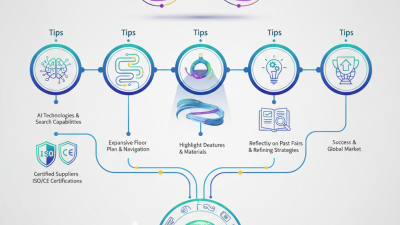
Tips: Request the original test report, certificate scope, production date, and laboratory accreditation. Match the cable’s standard to its actual application, not only its catalogue description. Check RoHS, REACH, and CPR evidence when applicable. An overlooked detail, such as an incorrect conductor class, can invalidate an otherwise attractive shipment.
Supplier selection should begin with the application, not the lowest quotation. Common options include PVC, PUR, TPE, silicone, rubber, braided, shielded, flat, coiled, and drag-chain cables. Each type handles movement, heat, chemicals, or electromagnetic interference differently. Ask suppliers for conductor structure, insulation data, bend radius, voltage rating, and tested service life. Request production samples. Paper specifications are not enough.
Pricing depends on copper content, conductor size, stranding method, insulation compound, shielding, jacket thickness, and order volume. Custom colors, printing, special connectors, and tooling can raise the unit cost. Freight and packaging also affect the landed price. A cheaper cable may use less copper or a weaker jacket. That saving can disappear after early replacement. Compare quotations using the same technical requirements and delivery terms.
Application matching requires practical questions. Will the cable bend continuously, drag across a machine, or remain fixed? Does it face oil, sunlight, welding sparks, cold storage, or repeated twisting? Shielded designs may suit signal equipment, while PUR jackets often fit demanding industrial movement. Silicone works well in wide temperature ranges, but it may not suit every abrasion condition. I have seen suitable-looking cables fail because the bend radius was underestimated. Supplier audits, batch inspection, traceability records, and independent testing improve reliability. Still, no checklist removes every risk. Trial installation remains necessary.