Top 10 Uses of THHN Wire for Your Next Electrical Project?
In the world of electrical projects, the versatility of THHN wire offers countless applications for professionals and DIY enthusiasts alike. Renowned electrical engineer, John Smith, notes, “THHN wire is a game-changer for modern electrical installations.” His statement underscores the wire's adaptability and reliability across a range of situations.
THHN wire, which stands for Thermoplastic High Heat-resistant Nylon-coated wire, is prized for its strengths. It's durable, efficient, and available in multiple gauges. From residential wiring to industrial applications, this wire stands up to the demands. However, using THHN wire isn't always straightforward. Understanding its ratings and heat tolerance is crucial.
When embarking on any electrical project, the choice of materials impacts overall safety and efficiency. Relying solely on THHN wire may seem tempting, but one must account for the environment and conditions of use. Each project brings unique challenges. As experts often remind us, knowledge about the materials you use is just as essential as the work itself.
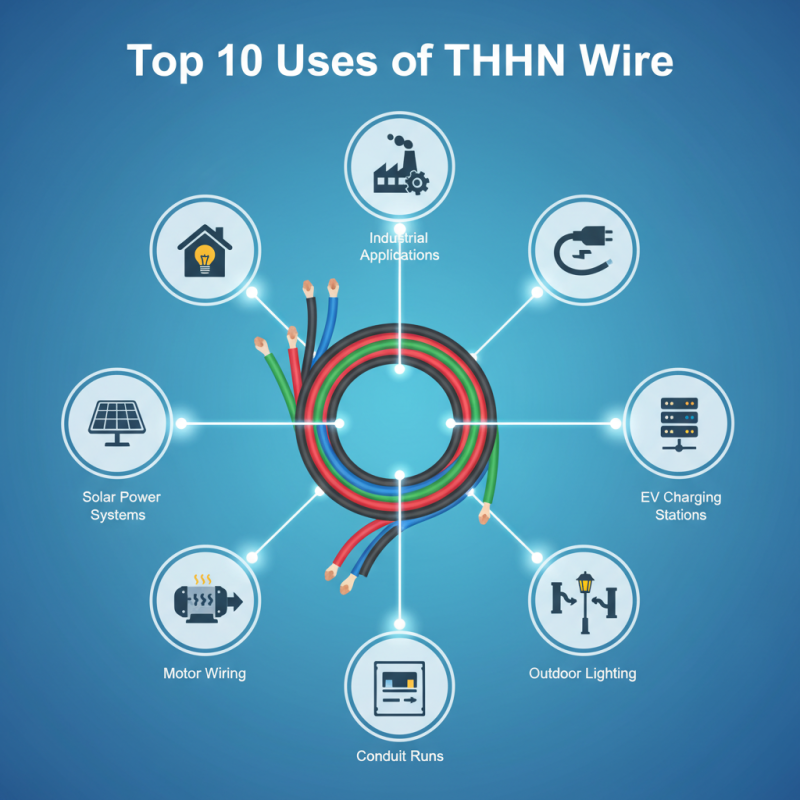
Top Applications of THHN Wire in Electrical Installations
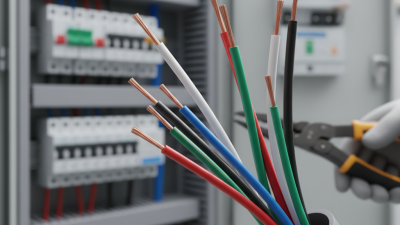
THHN wire is versatile and widely used in various electrical installations. One of its primary applications is in residential wiring. It is especially suitable for powering electrical panels and circuit breakers. This wire type is resistant to heat and moisture, making it ideal for homes in different climates. Its durability ensures a long life, reducing the need for frequent replacements.
In commercial settings, THHN wire finds applications in large-scale machinery. Factories often rely on this wire for its excellent conductivity. The wire’s robust construction withstands demanding environments and provides safety in operations. Additionally, it's commonly used in conduit applications. The ability to pull it through conduits smoothly simplifies the installation process for electricians.
While THHN wire is a reliable choice, there are considerations to keep in mind. Selecting the appropriate gauge is crucial to prevent overheating. Overloading the wire can lead to failures or hazardous situations. It’s essential to assess your project's specific requirements before making a final decision. Every application demands careful planning to ensure safety and efficiency.
Understanding the Properties and Benefits of THHN Wire
THHN wire is a popular choice for various electrical projects. Its unique properties make it versatile and reliable. This wire is rated for high temperature and resistant to moisture, making it ideal for many applications. The copper or aluminum conductor offers excellent conductivity. This wire is also lightweight, which facilitates easy handling and installation.
When using THHN wire, consider the environmental conditions. It is crucial to choose the right gauge to avoid overheating. Proper insulation is important to ensure safety. A mistake in installation could lead to serious issues. Always double-check your connections and work area.
Tips: Keep THHN wire away from direct moisture unless specifically rated for such conditions. Use the appropriate tools for cutting and stripping to prevent damage. Familiarize yourself with local electrical codes to ensure compliance. Understanding these details results in better project outcomes and enhanced reliability.
Top 10 Uses of THHN Wire for Your Next Electrical Project
| Use Case |
Description |
Benefits |
| Residential Wiring |
Used for wiring in homes and apartments. |
Durable, flexible, and corrosion-resistant. |
| Commercial Buildings |
Ideal for electrical systems in offices and retail spaces. |
Strong conductivity and reliable performance. |
| Industrial Applications |
Wiring for machinery and heavy equipment. |
Withstands harsh environments and heavy usage. |
| Lighting Systems |
Used for both indoor and outdoor lighting setups. |
Efficient and safe for low and high voltage systems. |
| Control Panels |
Essential for connecting control systems and machinery. |
Ensures accurate control and operation of equipment. |
| Data Communication |
Wiring for data transmission in network setups. |
Supports reliable and fast communication. |
| Solar Panel Systems |
Connecting solar panels to inverters and batteries. |
Resistant to UV exposure, suitable for outdoor use. |
| Control Systems in HVAC |
Wiring used in heating, ventilation, and air conditioning systems. |
Reliable performance in temperature control. |
| Marine Applications |
Used in boat and ship electrical systems. |
Water-resistant and durable against marine conditions. |
| Automotive Wiring |
Used for wiring in vehicles for electrical systems. |
Compact and flexible for efficient routing. |
Step-by-Step Guide to Using THHN Wire in Home Wiring
When embarking on a home wiring project, understanding THHN wire’s applications is vital. THHN, or Thermoplastic High Heat Resistant Nylon-coated wire, is favored for its durability and heat resistance. According to the National Electrical Manufacturers Association, THHN wire can withstand temperatures up to 90°C, making it ideal for various environments. Use it for indoor and outdoor circuits where moisture exposure and mechanical damage are concerns.
To work with THHN wire effectively, you must follow a step-by-step approach. Start by reviewing your project requirements and local building codes. Accurate measurements are essential. Cut the wire to length, allowing for some extra for connections. Stripping the wire insulation requires precision, as exposing too much can create hazards. Professionals recommend using a wire stripper set to the correct gauge. Remember, connections must be secure to avoid overheating. Data from the Electrical Safety Foundation International shows that poor connections are a primary cause of electrical fires.
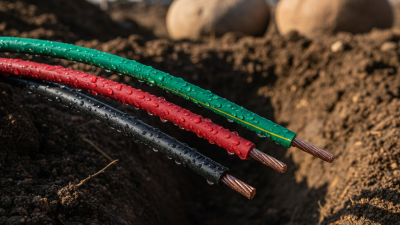
Consider the environment where you plan to install THHN wire. It excels in conduit installations. But in exposed areas, it’s crucial to use proper protection. While THHN is versatile, it’s not infallible. Assess each project’s specific needs carefully. Factors such as load calculations and wire capacity can affect performance. An overlooked detail can lead to significant issues down the line.
Common Mistakes to Avoid When Working with THHN Wire
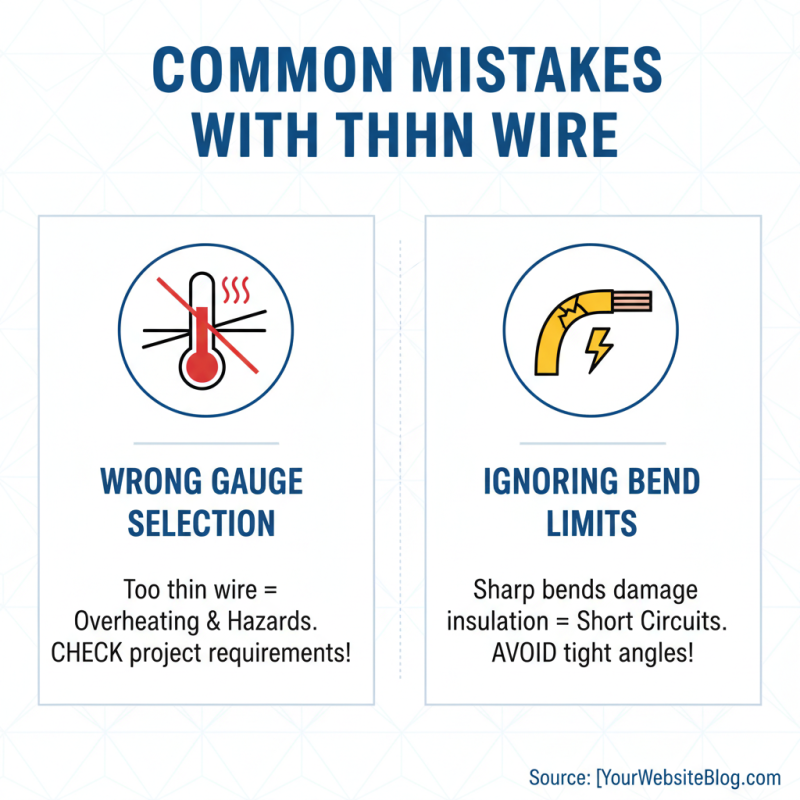
When working with THHN wire, avoiding common mistakes can make all the difference. Many beginners underestimate the importance of selecting the right gauge. Using a wire that is too thin for the application can lead to overheating and potential hazards. Always check your project’s requirements before selecting the wire size. Additionally, many overlook the twist and bend limits. Bending THHN wire too sharply can damage the insulation, increasing the risk of short circuits.
Another frequent error is improper stripping of the wire. A clean strip ensures better connections, while a sloppy job can cause arcing. Remember, the goal is to expose just enough copper without compromising the wire itself. Keeping the work area organized is another aspect often ignored. An untidy environment can lead to accidental damage and increased safety risks. It's crucial to work with tools that 'feel right' in your hand to maintain precision and control.
Finally, pay attention to local electrical codes. These codes ensure safety and reliability in installations. Ignoring them can lead to significant issues down the line. It’s important to stay informed and consult professionals when in doubt. Mistakes are part of the learning process, but being aware of common pitfalls can save time, money, and effort.
Safety Precautions for Handling and Installing THHN Wire
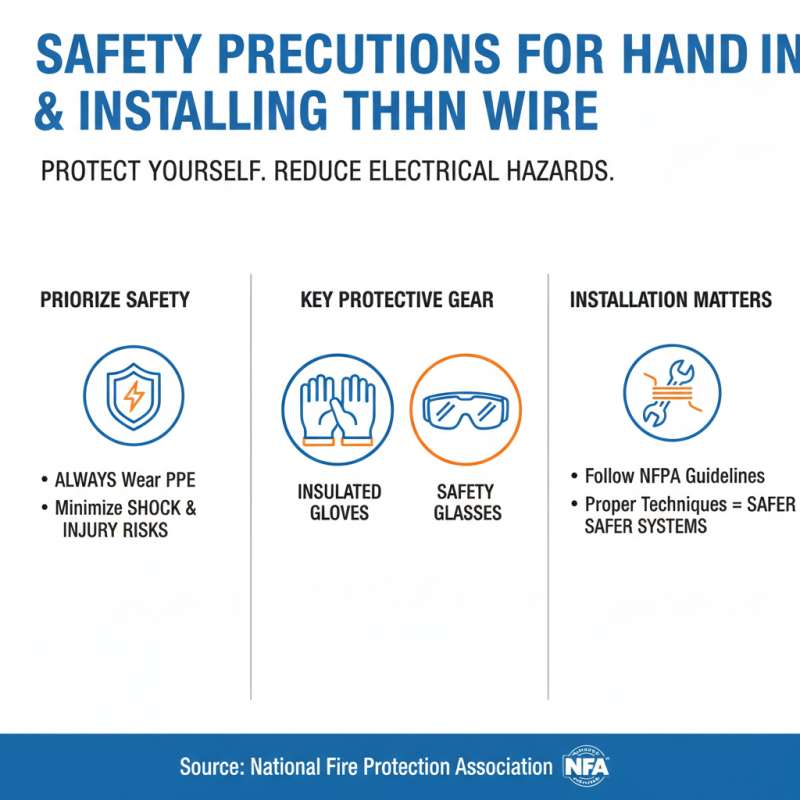
When handling THHN wire, safety must come first. According to the National Fire Protection Association (NFPA), proper installation techniques can significantly reduce electrical hazards. Always wear appropriate personal protective equipment (PPE) such as gloves and safety glasses. This layer of protection minimizes risks of electrical shock and injury.
Before installation, ensure the work area is free of debris and moisture. This reduces the chances of accidents. The Occupational Safety and Health Administration (OSHA) also recommends using insulated tools when working with electrical systems. They help prevent accidental contacts with live wires.
Be aware of the current ratings of THHN wire. It can carry up to 90 degrees Celsius in dry locations. However, in wet or exposed environments, the rating may decrease. Make sure to check local codes and standards for compliance. Ignoring these guidelines can lead to dangerous situations or potential fires. Always educate yourself continuously through reliable sources and stay updated with safety protocols in your electrical projects.