Hesheng Cable
Leave Your Message

2026 Best Home Wire Types for Global Buyers?

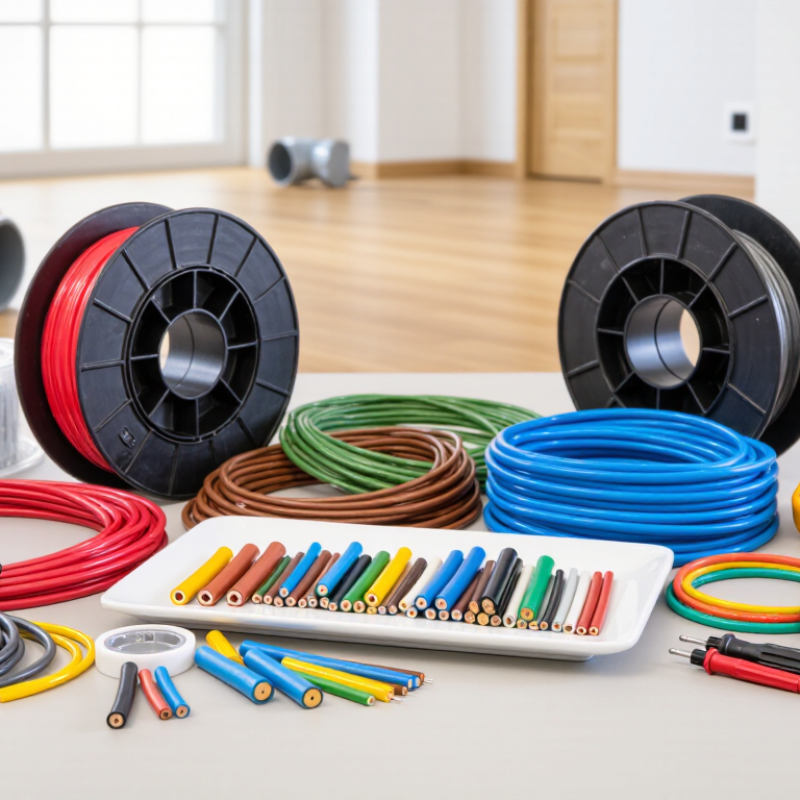
Choosing the best Home Wire for global buyers is not simply a matter of selecting copper over aluminum. The right cable depends on voltage, current, installation method, climate, fire risk, and local certification. A product suitable for a dry apartment in Germany may fail expectations in a humid coastal house in Southeast Asia. Labels matter. So do the details behind them.

Mike Holt, a widely recognized electrical educator, offers a practical warning: “Electricity is not forgiving.” His point remains important when comparing THHN/THWN, NYM, twin-and-earth, flexible cords, and low-smoke zero-halogen cables. Each type serves a different environment. PVC insulation may provide economical protection, while LSZH materials can reduce toxic smoke during a building fire. Copper usually offers excellent conductivity and flexibility. Aluminum can reduce cost and weight, but it requires careful termination and compatible connectors.

There is no perfect universal wire.

This guide examines the 2026 Home Wire market through a buyer’s practical lens. It considers conductor material, insulation temperature ratings, cross-sectional area, color identification, packaging, testing marks, and installation conditions. Reliable certification is essential, but certification alone does not guarantee correct application. Buyers should also verify factory traceability, technical datasheets, and independent test documentation. Some product pages still use vague terms such as “premium wire” without explaining measurable performance. That is a weakness worth questioning. A careful choice may cost more initially, yet it can reduce overheating, voltage drop, maintenance, and replacement risks. Always confirm the final selection with a qualified local electrician and the applicable electrical code.
2026 Best Home Wire Types for Global Buyers?

What Are the Main Types of Home Wiring in 2026?

In 2026, home wiring still depends on location, load, climate, and local electrical rules. The main choices are nonmetallic sheathed cable, insulated conductors in conduit, armored cable, and low-voltage cable. Nonmetallic sheathed cable is common in dry residential walls. It contains insulated conductors and a protective outer jacket. Installation is fast. However, it is not suitable for every exposed or damp space. Buyers should check temperature ratings, conductor size, grounding, and approved uses before ordering.

Conduit systems use individual THHN or THWN-2 conductors inside plastic or metal tubing. They suit garages, utility rooms, and homes needing easier future changes. The conduit protects the conductors, but fittings must be assembled carefully.

Armored cable adds mechanical protection where walls may suffer impact. It can help in workshops or retrofit projects. Yet, cutting and bonding the armor incorrectly can reduce safety. This detail is easy to underestimate.

Low-voltage cable serves lighting controls, doorbells, sensors, data, and security equipment. It should remain separate from mains wiring unless local rules permit otherwise. Aluminum conductors may reduce costs on larger feeders, but they require compatible terminals and careful preparation. Copper is often easier for smaller branch circuits. Global buyers should not choose by price alone. Standards, voltage, frequency, fire performance, and documentation vary by country. Confirm cable markings, measure the route, allow spare length, and ask a qualified electrician to verify the design. I would question my first estimate; real walls often hide surprises.
How Do Copper and Aluminum Wires Compare for Home Use?

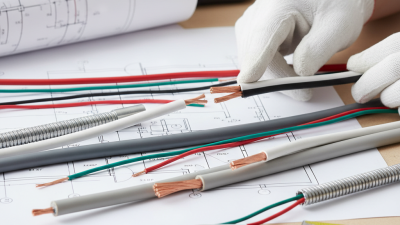
For home wiring in 2026, copper and aluminum serve different practical needs. Copper carries electricity efficiently through relatively small conductors. It also bends easily during outlet and switch installation. Its connections usually remain stable when properly tightened. That makes copper a common choice for indoor branch circuits.

Aluminum weighs much less and can reduce material and transport costs. Larger aluminum conductors may deliver similar current capacity to smaller copper ones. However, aluminum expands and contracts more noticeably as temperatures change. Poorly prepared terminations can loosen, oxidize, or develop heat at connection points. This risk deserves attention around breakers, outlets, and junction boxes. Aluminum needs compatible terminals and careful installation. It is not simply a cheaper copper replacement.

For a long feeder to a detached room, aluminum may be practical because weight matters. Copper can feel safer for dense indoor wiring with many tight bends. A qualified electrician should select the conductor size, insulation type, and connection method. Local electrical rules also vary between countries and sometimes between regions. Humid air, salty coastal conditions, and crowded panels can change the choice. A low purchase price can mislead. I would compare the complete installed cost, not only the wire spool. One detail is easy to overlook: the electrician must inspect existing terminals before joining different metals. My own preference would depend on the circuit length, installation environment, and future maintenance access.

Which Wire Insulation Types Suit Different Global Environments?

Choosing wire insulation for global projects requires more than matching voltage and conductor size. Climate often decides performance. PVC insulation suits many indoor systems and moderate temperatures, but prolonged sunlight, heat, or oil exposure can shorten its service life. In humid coastal areas, moisture resistance matters. In cold warehouses, brittle insulation can crack during bending.

For high temperatures and demanding industrial equipment, XLPE insulation offers strong thermal stability and dependable electrical performance. Silicone remains flexible in extreme heat and cold, making it useful near ovens, refrigeration units, and moving machinery. Polyurethane handles abrasion well, especially where cables drag across floors or pass through tight machinery. PTFE supports severe heat and chemical exposure, but its higher cost needs careful justification.

Low-smoke, halogen-free insulation can reduce harmful smoke in enclosed public or transport spaces. Outdoor installations also need tested resistance to ultraviolet light, water, and temperature cycling. Ask for independent test reports, operating temperature ranges, flexibility ratings, and aging data. Labels alone are not enough. A cable may perform well in a laboratory yet fail after repeated bending in a dusty site.

There is no universal best insulation. I still recheck the environment before approving a specification. Salt air, cleaning chemicals, and installation mistakes are easy to underestimate. Local testing requirements should also be verified before shipment.

2026 Best Home Wire Types for Global Buyers

Typical continuous conductor operating temperature by insulation type

How to read the chart: PVC is commonly selected for standard indoor residential wiring. XLPE and EPR provide higher thermal performance and are better suited to warmer locations, bundled cables, or demanding installations. Silicone rubber is flexible and suitable for high-temperature equipment, while PTFE offers very high heat resistance but is generally used for specialized wiring rather than ordinary household circuits.

These are typical material temperature ratings: PVC 70°C, XLPE 90°C, EPR 90°C, silicone rubber 180°C, and PTFE 200°C. Actual cable ratings depend on conductor construction, voltage, installation method, ambient temperature, and the electrical code applicable in the destination country.

How Should Buyers Match Wire Size to Electrical Load and Safety?

Choosing home wire begins with the electrical load, not cable color or price. A 1,500-watt heater on 120 volts draws about 12.5 amps. The same heater on 230 volts draws about 6.5 amps. Voltage changes the calculation. Record each appliance’s watts, voltage, and running time. Motors need extra starting current. Refrigerators and pumps are common surprises. Warm plugs can reveal an undersized circuit.

Match conductor size to the calculated current, breaker rating, installation method, and permitted temperature. A larger wire is not automatically safer if the breaker is incorrectly sized. Protection must remain compatible. Long runs need voltage-drop checks. A distant 2.5 mm² circuit may perform poorly despite passing a basic ampacity check. Bundled cables, hot ceilings, conduits, and insulation can reduce allowable capacity. Use copper or aluminum only where terminals and local rules permit. Standards differ.

For global purchasing, request the conductor cross-section in mm² and the insulation temperature rating. Confirm voltage, frequency, fire behavior, and certification documents with a qualified installer or local authority. Continuous loads may require extra capacity, often 125% under some codes. Verify this locally. Leave terminations to a licensed electrician, especially in wet rooms or service panels. My review step is practical: recalculate the load, inspect the breaker, and measure voltage at the farthest outlet. Measurements can challenge the first estimate.

2026 Best Home Wire Types for Global Buyers? — How Should Buyers Match Wire Size to Electrical Load and Safety?

Home Wiring Need Recommended Conductor Common Insulation Type Typical Voltage Rating Typical Cross-Section Typical Design Current Range* Suitable Applications Key Safety Considerations
Lighting and control circuits Annealed copper, solid or stranded PVC thermoplastic insulation 300/500 V or 450/750 V 1.5 mm²
≈ 16 AWG
10–16 A LED lighting, switches, alarms and low-to-moderate fixed loads Protect with the locally permitted overcurrent device; check in-wall derating and voltage drop.
General socket circuits Annealed copper, solid or stranded PVC or low-smoke, halogen-free thermoplastic 450/750 V 2.5 mm²
≈ 14 AWG
16–20 A Room outlets, computers, televisions and small household appliances Do not exceed the circuit rating; use residual-current protection where required by local rules.
Dedicated medium-load circuits Annealed copper, stranded preferred for larger conductors PVC or XLPE insulation 450/750 V or 0.6/1 kV 4 mm²
≈ 12 AWG
20–25 A Dishwashers, washing machines, larger kitchen appliances and small water heaters Use a dedicated circuit when the appliance has a high continuous load or manufacturer requirement.
High-load household circuits Annealed copper, stranded XLPE or high-temperature PVC 0.6/1 kV preferred for fixed high-load runs 6 mm²
≈ 10 AWG
25–32 A Electric ovens, cooktops, larger water heaters and selected air-conditioning circuits Confirm starting current, continuous-load rules, terminal compatibility and thermal derating.
Main feeder or long high-load run Copper or aluminum alloy, sized by a qualified designer XLPE, PVC or low-smoke halogen-free insulation 0.6/1 kV commonly used 10 mm² and above
≈ 8 AWG for 10 mm²
40–50 A or higher Distribution-board feeders, detached structures and long supply routes Aluminum requires approved terminations, correct torque and attention to oxidation and expansion.
Flexible appliance connections Fine-stranded copper PVC, thermoplastic elastomer or rubber 300/500 V or 450/750 V 0.75–2.5 mm² Based on appliance rating Portable appliances, extension leads and movable equipment Use strain relief, avoid hidden extension leads and select a cable rated for movement, heat and moisture.
Damp, outdoor or buried routes Copper or aluminum alloy, depending on system design Moisture-resistant XLPE/PVC or an approved multicore cable system 0.6/1 kV commonly selected Selected by load and route length Selected by installation method Garden buildings, outdoor equipment and underground feeder routes Use conduit, burial protection, glands and water-blocking measures required by local regulations.
Load-current calculation
For a mostly resistive single-phase load: I ≈ P ÷ V. For motors and power supplies, allow for power factor and starting current. At 230 V, a 3,000 W resistive load draws approximately 13.0 A; at 120 V, it draws approximately 25.0 A.
Sizing sequence
Choose the conductor material and insulation, calculate design current, check the installation method, apply ambient-temperature and grouping corrections, verify voltage drop, then coordinate the protective device.
Important qualification
The current ranges above are typical preliminary values for copper conductors in common residential conditions, not universal ampacity ratings. Final sizing must follow the destination country's electrical code, local utility requirements and a qualified electrician's design.

*Ampacity depends on conductor material, insulation temperature, number of loaded conductors, ambient temperature, installation method, enclosure, route length and allowable voltage drop. Metric cross-sections and AWG values are approximate equivalents and should not be treated as interchangeable without checking the applicable standard.

What Standards and Certification Marks Should Global Buyers Check?

For global home-wire purchases in 2026, certification marks deserve close attention. Wire types differ by voltage, insulation, temperature, and installation method. Check whether the cable follows relevant IEC standards, especially IEC 60228 for conductor classes. The product label should state conductor size, rated voltage, insulation material, and temperature rating. Read the label closely.

A CE mark may show declared conformity for applicable European requirements, but it does not automatically prove superior quality. Buyers targeting the United Kingdom should check whether UKCA requirements apply. Other markets may require national safety marks or electrical registration documents.

Ask for a current test report, declaration of conformity, and factory quality records. Match the certificate number with the exact cable model, conductor size, and production date.

Do not trust a printed logo alone. A certificate can be genuine but unrelated to the shipment. Verify it through the issuing organization’s public database when possible. Confirm that the testing covered flame resistance, insulation strength, conductor resistance, and aging performance. For damp rooms or outdoor routes, inspect water resistance and suitable sheath ratings.

A common mistake is choosing by color and price. I have seen specifications overlooked because the packaging looked professional. That judgment needs correction. Country-specific electrical rules still control the final installation, so a qualified local electrician should review the selection before use.