Hesheng Cable

Leave Your Message
Choosing a reliable Electrical Wire Single Core manufacturer requires more than comparing prices, catalogs, or polished factory photographs. In 2026, buyers must examine conductor material, insulation quality, voltage ratings, temperature performance, and production consistency. A copper core may look bright and uniform, yet its resistance can reveal hidden quality differences.
Electrical safety comes first.
Electrical educator and NEC consultant Mike Holt has warned, “Electricity is unforgiving.” That brief statement remains highly relevant when selecting wires for control panels, building systems, machinery, and low-voltage installations. A dependable manufacturer should provide clear technical datasheets, batch identification, test reports, and evidence of compliance with applicable standards. Independent laboratory testing adds confidence, especially when projects involve heat, vibration, moisture, or continuous operation.
This guide reviews leading Electrical Wire Single Core manufacturers through practical criteria. It considers manufacturing experience, copper or aluminum processing, insulation compounds, dimensional control, delivery reliability, customization, and after-sales support. Factory audits and sample testing can expose weaknesses that online claims conceal. They can also cost time.
No ranking is perfect. Market conditions change, certifications expire, and one supplier may perform differently across regions or product ranges. That limitation deserves attention. Therefore, this guide encourages engineers, distributors, and project buyers to verify current documentation before signing contracts. The strongest manufacturer is not always the largest. It is the supplier that consistently delivers safe, traceable, correctly specified wire for the intended application.
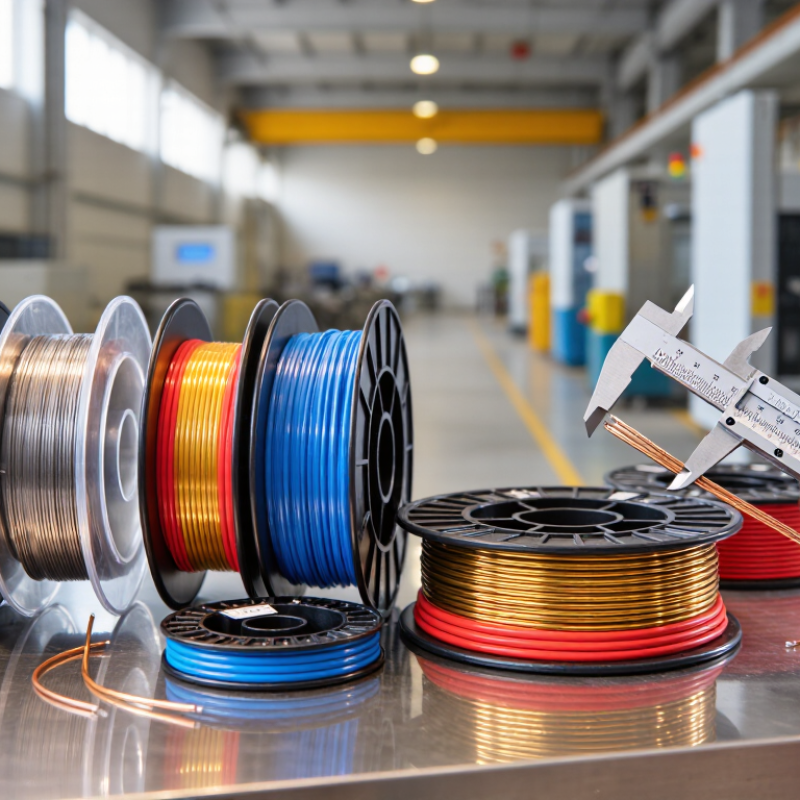
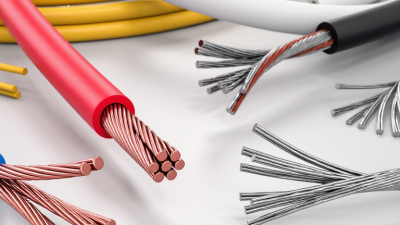
Single-core electrical wire contains one conductive path inside its own insulation layer. The conductor is usually copper or aluminum. Copper offers strong conductivity and easier termination, while aluminum reduces weight and material cost. The conductor may be solid for fixed wiring or stranded for repeated movement. That distinction matters.
Its structure is simple but carefully engineered. A metal conductor carries current, and insulation separates it from people, equipment, and neighboring circuits. Common insulation materials include PVC, XLPE, and low-smoke, halogen-free compounds. Each option handles heat, moisture, flexibility, and flame performance differently. The insulation thickness must match the rated voltage and installation conditions. Color identification also helps technicians trace circuits during maintenance. Small details prevent major mistakes.
Single-core wires appear in distribution boards, control cabinets, lighting circuits, and building conduits. They are also used inside appliances and industrial equipment when the wiring remains protected and properly supported. During installation, technicians check the conductor size, terminal fit, bend radius, and insulation damage. A loose terminal can create heat even when the wire looks oversized. Stripping too deeply is another common error. It weakens insulation near the connection. Selection should follow current demand, ambient temperature, installation method, and applicable electrical standards. A wire that works in a dry panel may fail in a hot, crowded enclosure. The label alone is not enough; actual site conditions deserve review.
Technical reference table for evaluating single-core electrical wire by construction, performance, compliance requirements, and typical application.
| Evaluation Dimension | Wire Category or Feature | Typical Technical Data | Construction and Performance Characteristics | Key Applications and Selection Notes |
|---|---|---|---|---|
| Definition | Single-core electrical wire | One electrical conductor contained within one insulation system; the conductor may be solid or stranded. | Designed to carry current through a single insulated core. It is commonly installed individually or grouped inside a conduit, panel, appliance, or cable assembly. | Suitable for building wiring, control panels, internal equipment wiring, automotive harnesses, and other installations where the required voltage, temperature, flexibility, and environmental ratings are met. |
| Conductor material | Annealed copper | High electrical conductivity, generally about 58 MS/m at 20°C for standard annealed copper. | Offers low electrical resistance, good termination performance, and strong resistance to repeated bending compared with many alternative conductor materials. | Commonly selected for building circuits, control wiring, power distribution, grounding conductors, and equipment connections where compact size and reliable terminations are important. |
| Conductor material | Aluminium | Lower conductivity than copper; a larger cross-sectional area is normally required for an equivalent current-carrying capacity. | Lower density can reduce conductor weight, but connections require compatible terminals and careful control of oxidation, thermal expansion, and joint torque. | Used mainly in selected power-distribution applications. Installation must follow the applicable electrical code and the terminal manufacturer's requirements. |
| Conductor construction | Solid conductor | One metallic wire with a fixed cross-section; commonly used in smaller building-wire sizes. | Provides dimensional stability and straightforward termination, but has lower flexibility and is less suitable for repeated movement or tight routing. | Often used for fixed residential and commercial wiring inside conduit, junction boxes, and distribution boards. |
| Conductor construction | Stranded conductor | Multiple small wires twisted together to form one electrical core. | More flexible than solid wire. Flexibility generally increases as the number of strands rises and the individual strand diameter decreases. | Preferred for control cabinets, machinery, switchgear, vehicle wiring, and installations involving vibration, movement, or frequent routing changes. |
| Insulation structure | Thermoplastic insulation | Common materials include PVC and low-smoke, low-halogen compounds; temperature ratings vary by construction and standard. | Can be extruded efficiently and may provide resistance to moisture, abrasion, oils, or flame according to the specific formulation. | Widely used for general-purpose building wire, appliance wiring, control circuits, and low-voltage electrical installations. |
| Insulation structure | Thermoset insulation | Common materials include cross-linked polyethylene and ethylene-propylene rubber; typical ratings may reach 90°C or higher when specified. | Maintains useful electrical and mechanical properties at elevated temperatures and can provide improved resistance to heat, moisture, and chemicals. | Used for demanding power, industrial, renewable-energy, and equipment applications where higher thermal performance is required. |
| Voltage rating | Extra-low-voltage wire | Often used in circuits below 50 V AC or 120 V DC, although the exact classification depends on the governing code. | May have thinner insulation and smaller conductor sizes than mains wiring. Insulation, polarity, and separation requirements remain important. | Suitable for sensors, signaling, data-related control circuits, alarms, LED systems, and low-voltage automation equipment. |
| Voltage rating | Low-voltage power wire | Common industrial and building-wire ratings include 300 V, 600 V, and 1,000 V classes, depending on the product standard. | Requires insulation and construction capable of withstanding the specified operating voltage, transient stresses, and installation environment. | Used for branch circuits, feeders, machinery, control panels, renewable-energy systems, and internal equipment wiring. |
| Conductor size | Metric cross-sectional area | Typical sizes include 0.5, 0.75, 1.0, 1.5, 2.5, 4, 6, 10, 16, 25, and 35 mm². | A larger cross-sectional area usually lowers resistance and increases ampacity, subject to insulation temperature, installation method, ambient temperature, and grouping. | Select the size using the applicable code, allowable voltage drop, prospective fault current, termination limits, and continuous-load requirements. |
| Conductor size | American Wire Gauge | Common sizes include 18, 16, 14, 12, 10, 8, 6, 4, and 2 AWG; a smaller AWG number represents a larger conductor. | AWG is a logarithmic sizing system primarily used in North America. AWG and metric sizes are not always exact equivalents. | Use the size system required by the project standard and verify the actual conductor area, ampacity, and terminal compatibility rather than relying only on nominal conversion. |
| Electrical performance | DC resistance | Varies with conductor material, cross-sectional area, temperature, and strand construction. Resistance increases as conductor temperature rises. | Lower resistance reduces I²R losses and voltage drop. Published resistance values should be compared at the same reference temperature. | Important for long runs, battery systems, motor circuits, high-current equipment, and applications where energy efficiency or stable operating voltage is required. |
| Thermal performance | Continuous current-carrying capacity | Depends on conductor size, insulation temperature rating, ambient temperature, installation method, and the number of loaded conductors. | Ampacity is not determined by conductor size alone. Derating may be required for conduit fill, bundling, high ambient temperature, or limited heat dissipation. | Use the current-carrying-capacity tables in the applicable electrical code and apply all required correction and adjustment factors. |
| Flexibility | Flexible single-core wire | Usually made with fine-stranded copper and a flexible PVC, rubber, or cross-linked insulation system. | Supports tighter bends and repeated movement, but may require ferrules, suitable terminals, or special bending-radius controls. | Recommended for control cabinets, test equipment, robotics, portable equipment, battery connections, and vibration-prone installations. |
| Environmental resistance | Moisture, oil, heat, and UV resistance | Performance depends on the insulation compound, jacket design if present, and the product's tested environmental rating. | Specialized insulation can improve resistance to water, oils, sunlight, chemicals, abrasion, and elevated temperature; no single wire construction provides every property. | Confirm the wire's marking and certification for wet locations, outdoor exposure, oil contact, direct sunlight, or industrial chemicals before installation. |
| Fire performance | Flame-retardant and low-smoke options | Some constructions meet flame-retardance, smoke-density, or halogen-emission requirements defined by the relevant standard. | Low-smoke, low-halogen materials can reduce corrosive and opaque smoke during a fire, but their mechanical and electrical properties must also match the application. | Consider for public buildings, transport facilities, data centers, tunnels, and confined spaces where smoke and corrosive emissions are critical safety concerns. |
| Identification | Color coding and surface marking | Insulation colors and printed markings identify circuit function, voltage class, size, temperature rating, and certification information. | Clear identification reduces wiring errors and supports inspection, maintenance, and troubleshooting. Color conventions vary by jurisdiction. | Follow the local wiring code for protective earth, neutral, line, and control-circuit identification. Never use color alone where additional marking is required. |
| Installation method | Conduit and raceway installation | Single-core wires are commonly installed in PVC, metal, or other approved raceways with fill and bending limits. | Requires correct conductor grouping, pulling tension, bend radius, separation, and thermal derating. Conductors in the same AC circuit are generally routed together. | Common in commercial buildings, industrial plants, control panels, and locations where wiring may need future replacement or modification. |
| Termination | Terminal and connector compatibility | Terminations must match the conductor material, size range, strand class, insulation diameter, and voltage/current rating. | Incorrect stripping, loose torque, incompatible metals, or unsupported fine strands can cause hot spots, arcing, corrosion, or connection failure. | Use listed terminals and follow the specified stripping length and tightening torque. Apply approved joint compounds only where required by the product or code. |
| Compliance | Product standards and certification | Relevant requirements may come from IEC, EN, UL, CSA, national wiring codes, or other recognized standards, depending on the market. | Standards can define conductor resistance, dimensions, insulation thickness, voltage rating, flame behavior, flexibility, aging, and electrical tests. | Verify the marking, test documentation, and certification required in the destination country before purchasing or approving a wire for production use. |
| Quality inspection | Key incoming-inspection checks | Check conductor size, material, insulation thickness, outer diameter, print legibility, resistance, surface defects, and packaging condition. | Dimensional and electrical checks help identify undersized conductors, eccentric insulation, damaged surfaces, mixed specifications, and traceability gaps. | For critical applications, request batch test reports, verify lot traceability, and perform sample testing according to the purchasing specification. |
| Application fit | Building and panel wiring | Typically uses insulated copper conductors selected for the circuit voltage, ampacity, installation method, and required flexibility. | Fixed wiring prioritizes code compliance, flame performance, current capacity, voltage drop, and reliable termination. | Used in distribution boards, control panels, lighting circuits, socket circuits, machinery cabinets, and building services. |
| Application fit | Automotive and mobile equipment | Usually requires fine-stranded conductors and insulation rated for vibration, temperature cycling, oils, fluids, and limited installation space. | Mechanical flexibility and abrasion resistance are often more important than the characteristics of fixed building wire. | Use only wire designed and tested for the vehicle or mobile-equipment environment, with correctly rated fuses, terminals, and protective routing. |
| Application fit | Solar and battery systems | Often requires UV-resistant, weather-resistant, flexible insulation and a voltage rating suitable for the DC system. | DC circuits can maintain current flow during faults, so polarity, overcurrent protection, insulation integrity, and connector compatibility are essential. | Use application-specific photovoltaic or battery wire where required, and verify temperature, sunlight, wet-location, and flame-performance ratings. |
| Selection reminder: The correct single-core wire is determined by conductor material, cross-sectional area, voltage rating, insulation temperature, ampacity, voltage drop, installation environment, flexibility, termination method, and the electrical code applicable to the project. | ||||