Choosing the best Four Core Wire manufacturer in China requires more than comparing prices. Buyers need verified production capability, stable quality, and dependable communication. This guide examines how experienced sourcing teams assess suitable suppliers for industrial, commercial, and infrastructure projects.
A reliable manufacturer should explain conductor materials, insulation options, voltage ratings, temperature resistance, and applicable testing standards. Factory evidence matters. Look for clear production photographs, organized extrusion lines, finished cable drums, and traceable inspection records. Sample testing can reveal conductor flexibility, insulation thickness, color consistency, and printing accuracy before larger orders begin. Supplier experience with international shipments also helps reduce packaging, documentation, and delivery problems.
No supplier is perfect.
Price alone can hide important risks. A lower quotation may reflect thinner insulation, limited testing, or unclear material specifications. Buyers should request product datasheets, certificates, sample reports, factory audit details, and realistic lead times. Independent verification is valuable when claims seem vague or unusually attractive. Strong suppliers usually answer technical questions directly and accept reasonable quality checks.
This article compares key factors for identifying a capable Chinese Four Core Wire manufacturer and supplier. It considers engineering knowledge, manufacturing controls, customization support, communication, after-sales service, and long-term reliability. The final choice should match the project’s electrical requirements, installation environment, budget, and delivery schedule. Careful evaluation takes time, but it can prevent costly replacement work and delayed installations.
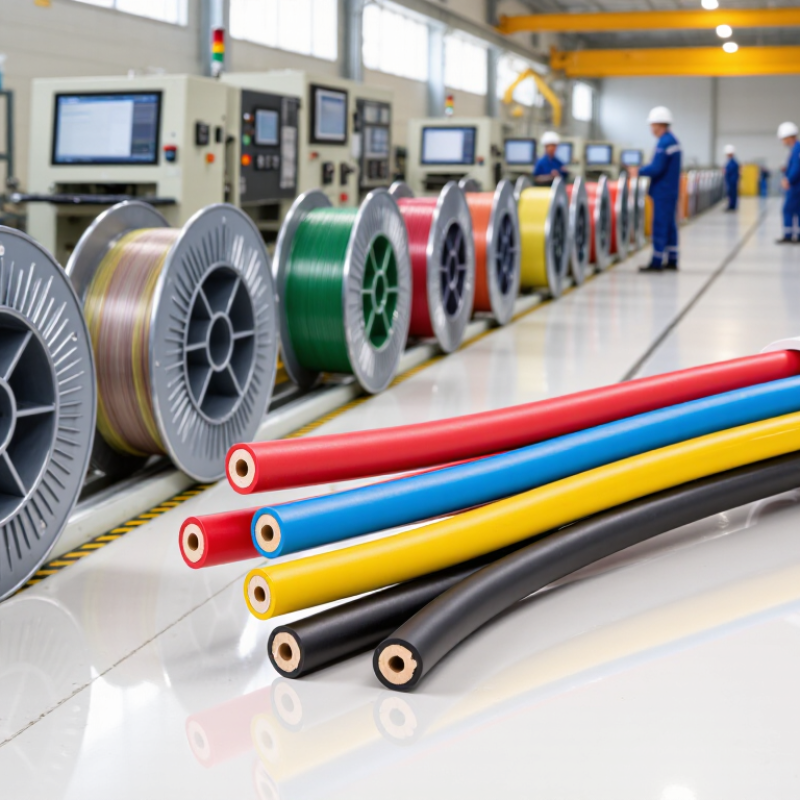
Four-core wire contains four separate conductors inside one cable structure. Each conductor may carry power, control signals, or data, depending on the circuit design. The fourth conductor is not automatically a spare. In some systems, it serves as a neutral, signal return, protective earth, or communication line. Always confirm the wiring diagram before installation.
This cable is common in industrial control panels, pumps, motors, lighting systems, HVAC equipment, and low-voltage automation. Flexible stranded conductors suit moving machinery, while solid conductors work well in fixed installations. Copper provides reliable conductivity, but aluminum may be selected for larger, weight-sensitive projects. Insulation must match the working voltage, temperature, moisture, oil exposure, and mechanical stress. Outdoor installations need a suitable jacket and secure sealing.
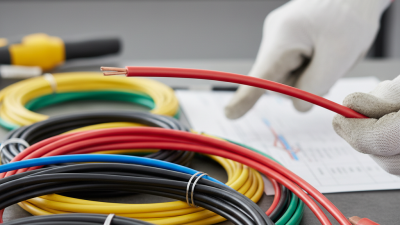
In practical purchasing, check conductor size, insulation thickness, temperature rating, bending radius, and test documentation. A dependable manufacturer should provide resistance results, voltage testing records, and clear production traceability. Color identification helps, but local wiring requirements and project drawings remain more important. A four-core cable can reduce installation space and simplify routing, yet incorrect core assignment may damage equipment or create a safety risk. I have seen specifications that call a cable “four-core” without clearly defining the earth conductor. That wording needs careful review. When the cable runs near motors or inverters, shielding and separation may also deserve attention.
Four-core wire commonly contains four insulated conductors arranged for three-phase power with a neutral, control circuits, or other low-voltage power applications. The chart shows the maximum conductor DC resistance at 20°C for common copper conductor cross-sectional areas, based on standard IEC 60228 values for stranded Class 2 conductors.
How to read the chart: Larger conductor sizes have lower resistance and are suitable for higher current loads over comparable cable lengths. Actual selection should also consider installation method, ambient temperature, voltage drop, insulation rating, and applicable electrical codes.
Choosing a Chinese four-core wire manufacturer requires more than comparing prices. A capable supplier should explain conductor material, insulation type, core arrangement, and suitable operating temperatures. Ask for resistance data at a stated temperature, not vague claims about “high quality.” Copper strands should appear bright, even, and firmly twisted. Uneven strands can increase resistance and heating.
Factory experience becomes visible in small details. During an audit, check extrusion lines, drying controls, and storage conditions. Dust near the insulation process is a warning sign. Request samples from normal production, not specially prepared pieces. Measure outer diameter, conductor size, insulation thickness, and bending performance. A reliable manufacturer should provide inspection records, batch numbers, and traceable material certificates. Independent testing may also verify electrical performance and flame behavior against the required market standards.
Communication is another practical test. Can the supplier explain tolerance limits clearly? Can engineers respond with drawings instead of sales language? Check whether they handle custom lengths, printing, packaging, and repeat orders without confusion. No factory is flawless. I would still question suppliers that hide minor defects or promise impossible delivery times. A professional partner admits limitations and proposes corrective action. One overlooked issue is packaging: crushed coils can damage insulation before installation. That detail is easy to miss.
| Evaluation Dimension | What a Qualified Supplier Should Demonstrate | Relevant Technical Reference | Recommended Verification Method | Suggested Weight |
|---|---|---|---|---|
| Conductor Material | Clearly specified copper or aluminium conductor, with consistent material composition and no unexplained substitution between production batches. | IEC 60228 for conductor construction and resistance requirements. | Review the material specification, supplier certificate, incoming-material records, and independent conductivity or resistance test results. | 15% |
| Conductor Class and Flexibility | The conductor class matches the application: Class 1 for solid conductors, Class 2 for stranded fixed-installation conductors, or Class 5 for flexible conductors. | IEC 60228 conductor classes. | Check the cross-sectional area, strand count, strand diameter, lay construction, and measured DC resistance at 20°C. | 12% |
| Insulation and Sheath Materials | The insulation and outer sheath are selected for the voltage, temperature, mechanical, moisture, and installation conditions of the intended use. | IEC 60502-1 for applicable low-voltage power cables; product-specific material requirements may also apply. | Request material datasheets and verify insulation thickness, sheath thickness, tensile strength, elongation, and ageing performance. | 12% |
| Voltage Rating and Core Identification | The cable voltage designation is suitable for the operating system, and all four cores are consistently identified by color, numbering, or other agreed marking. | Applicable cable standard and the buyer’s wiring identification requirements. | Compare the printed cable marking, core colors, conductor sequence, voltage designation, and approved technical drawing. | 8% |
| Electrical Performance | All four cores meet specified conductor resistance, insulation resistance, and high-voltage withstand requirements without breakdown or abnormal leakage. | IEC 60228 and the relevant cable construction standard. | Review routine test records and conduct sample testing for DC resistance, insulation resistance, and voltage withstand. | 15% |
| Flame-Retardant Performance | The requested flame behavior is supported by a recognized test report rather than by an unsupported marketing statement. | IEC 60332-1-2 for vertical flame propagation testing of a single insulated wire or cable. | Verify the exact cable construction, test method, sample description, laboratory details, and report validity. | 8% |
| Dimensional and Visual Consistency | Cable diameter, insulation thickness, sheath thickness, surface finish, printing, and lay length remain within the approved specification. | Applicable product standard and approved engineering drawing. | Perform incoming inspection using calibrated gauges, micrometers, diameter measurement tools, and visual sampling. | 8% |
| Quality Management System | Documented control exists for design, purchasing, production, inspection, nonconforming products, corrective actions, and traceability. | ISO 9001 quality-management-system principles. | Review a current certificate, certificate scope, audit status, process-control plans, and sample batch records. | 10% |
| Regulatory and Material Compliance | The supplied materials are supported by a current declaration or test evidence for the destination market’s chemical and environmental requirements. | Applicable requirements such as RoHS and REACH, where relevant to the destination market. | Request a material declaration, restricted-substance report, and supporting laboratory documentation for the exact product construction. | 5% |
| Production Capacity and Lead Time | The supplier can meet the required cross-section, color, construction, packaging, and order quantity without compromising inspection or traceability. | Buyer’s purchase specification, forecast, and delivery requirements. | Confirm monthly capacity, minimum order quantity, standard lead time, production schedule, and contingency arrangements in writing. | 5% |
| Export Packaging and Traceability | Each coil, reel, or carton is protected against moisture and mechanical damage and includes batch, length, specification, and inspection information. | Purchase contract and destination-market packaging requirements. | Approve packaging samples and verify labels, batch codes, length records, packing lists, and shipping-condition controls. | 2% |
| Total Suggested Evaluation Weight | 100% | |||
China Best Four Core Wire Manufacturer Supplier?
Four Leading Four-Core Wire Suppliers in China
China’s four leading four-core wire suppliers usually serve different application needs. Industrial cable manufacturers focus on stable power transmission, flexible jackets, and large-volume production. Their factories often provide copper resistance reports, insulation checks, and batch traceability. These details matter when wires run through control cabinets or moving equipment.
Appliance and control-wire specialists produce compact cables with accurate color coding and consistent conductor sizes. They are suitable for sensors, household equipment, and low-voltage panels. A reliable supplier should explain temperature ratings, bending limits, and insulation materials clearly. Ask for production samples, not only a polished catalog image.
Automotive and energy-cable suppliers handle vibration, heat, and demanding installation spaces. Their testing may include abrasion, tensile strength, flame performance, and repeated bending. Custom OEM suppliers support unusual lengths, connector preparation, printing, and packaging. They can be useful for export projects, but communication quality varies.
Check the factory, not just the quotation. Review equipment, testing records, worker procedures, and complaint handling. Request current certificates and confirm whether they cover the exact cable structure. A cheap wire may pass a visual inspection and still fail under heat. That is an uncomfortable lesson. Supplier selection should compare evidence, not promises.
Choosing a four-core wire supplier requires more than comparing prices. Manufacturing standards shape safety, consistency, and service life. A capable factory should control copper purity, conductor stranding, insulation materials, and cable dimensions. Documented procedures should cover incoming materials, extrusion temperatures, line speed, and finished-coil identification. These details matter during installation. Small variations can cause large problems later.
Quality control should move through every production stage. Technicians can measure conductor resistance, insulation thickness, tensile strength, and outer diameter. A spark tester can detect insulation weaknesses during extrusion. Calibrated instruments matter. So does traceability. A reliable supplier should provide batch numbers, inspection records, and corrective-action reports. Practical audits often reveal gaps that documents hide. Paperwork is not enough. Retained samples also support later investigations and improve accountability.
Certifications add confidence, but their scope requires careful checking. ISO 9001 reflects a quality management system, while applicable IEC or UL requirements depend on the target market and cable design. Ask for current certificates, issuing bodies, validity dates, and covered products. Test reports should match the exact conductor size, insulation material, and voltage rating. One certificate cannot automatically cover every wire. This point is easy to miss. No factory is flawless. An honest supplier records nonconformities, explains their causes, and shows measurable improvements instead of offering perfect-sounding claims.
Choosing a four-core wire supplier requires more than comparing quoted prices. Start by defining the application, voltage, current, temperature, bending frequency, and installation environment. A supplier should explain conductor size, insulation material, shielding options, and jacket performance in clear technical language. Vague answers are warning signs.
Ask for samples before placing a large order. Check the outer diameter, flexibility, printing quality, conductor arrangement, and stripping performance. Request test reports for resistance, insulation strength, flame behavior, and temperature endurance. These documents should match the supplied product, not a generic specification sheet. Factory experience matters here. A capable manufacturer can discuss production tolerances, equipment controls, and common failure points.
Review quality systems, material traceability, inspection records, and delivery capacity. Confirm minimum order quantities, sample lead times, packaging details, and corrective-action procedures. Independent certification can support trust, but certificates alone are not enough. An on-site or video factory audit may reveal storage problems or inconsistent testing. Do not ignore communication speed. Delayed technical replies can become costly during production changes.
I have learned that the cheapest wire is rarely the lowest-cost choice. However, expensive pricing does not prove better quality. Recheck the design. A supplier may recommend a construction that works well, yet your installation conditions could expose hidden weaknesses. Leave room for testing and revision. That small delay can prevent a much larger failure.