China Top Lift Cable Manufacturers For Global Buyers?
Choosing China’s top Lift Cable manufacturers requires more than comparing export prices or polished factory websites. Global buyers need evidence of consistent engineering, stable production, and dependable after-sales support. A credible manufacturer should explain cable construction, tensile strength, fatigue performance, lubrication, corrosion resistance, and compatible elevator systems. Factory audits, batch records, inspection reports, and traceable certificates provide stronger confidence than advertising claims.
Lift cable expert Dr. Klaus Wolf once stated, “A cable is only as reliable as its weakest production control.” That principle remains practical for international procurement. Buyers should inspect wire quality, strand uniformity, socketing methods, packaging, and storage conditions. A properly packed cable should arrive dry, labeled, and protected from crushing during transport. Small details matter.
The strongest Chinese suppliers usually combine modern drawing equipment, controlled heat treatment, laboratory testing, and experienced technicians. They also understand regional requirements, project documentation, and communication across time zones. Yet no shortlist is perfect. A manufacturer may offer impressive test data but lack field experience in a buyer’s climate. Another may provide excellent products but respond slowly when specifications change.
This guide examines leading China Lift Cable manufacturers through product quality, technical capability, certification practices, customization, delivery reliability, and customer support. It also highlights questions buyers sometimes overlook, including replacement planning and installation guidance. Careful evaluation cannot remove every risk. It can, however, make the final decision more transparent, measurable, and defensible.
What Defines a Top Lift Cable Manufacturer in China
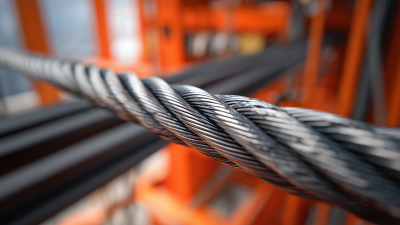
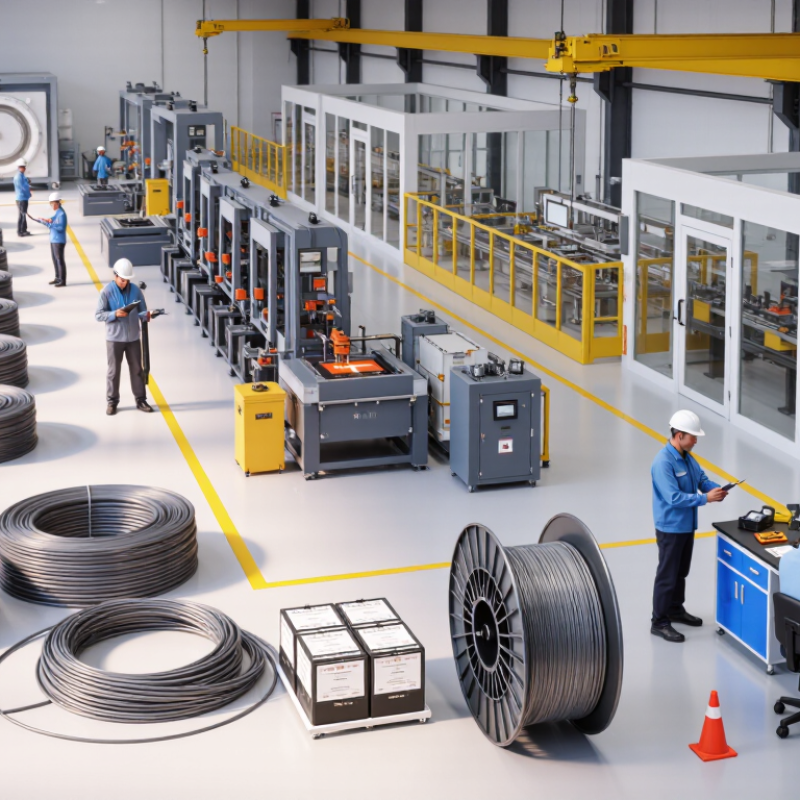
A top lift cable manufacturer in China is defined by controlled production, not attractive catalog photos. The factory should identify steel grade, rope construction, lay direction, coating, and breaking force for every batch. ISO 2408 provides requirements for steel wire ropes, while ISO 4309 explains inspection, discard, and maintenance practices for lifting equipment. These standards give buyers a practical baseline.
Testing should continue beyond tensile strength. Fatigue cycles, bend performance, dimensional tolerance, and corrosion resistance matter in cranes, hoists, and elevators. The 2023 ILO report estimated 2.93 million work-related deaths worldwide, reminding buyers that small quality failures can carry serious consequences.
A reliable supplier therefore provides mill certificates, lot numbers, calibration records, and test reports from identifiable laboratories. Factory audits should also check wire drawing, closing, lubrication, and final packing. Traceability matters.
Real experience often reveals gaps. Some suppliers offer excellent samples but weaker consistency during volume production. That deserves scrutiny. Buyers should request samples from several production lots and compare them independently. A top manufacturer welcomes this process, even when results are uncomfortable. It should explain deviations instead of hiding them. Production capacity alone proves little. Skilled technicians, documented corrective actions, and stable inspection routines reveal far more. Clear communication helps too, especially when specifications cross Chinese, European, or North American standards. No factory is flawless. The dependable one measures its weaknesses and improves them.
Key Lift Cable Types and Their Suitable Applications
Lift cables must match the elevator design, load pattern, and operating environment. Traction wire ropes remain common in passenger and freight lifts. Their steel strands run over sheaves and support repeated bending. Select the rope diameter, tensile grade, and construction together. A thicker rope is not automatically safer.
Governor ropes serve a different purpose. They connect to the overspeed safety system and require stable movement with limited stretch. Compensation ropes balance changing rope weight in taller buildings. They hang below the car and may include protective coatings for humid or dusty shafts.
For heavy-duty freight lifts, high-strength hoist ropes can handle larger loads, but sheave compatibility still matters.
Material choice affects service life. Galvanized steel ropes resist ordinary moisture and suit many indoor installations. Stainless steel options perform better in corrosive areas, such as coastal facilities, though their cost is higher. During sourcing, inspect lay length, surface finish, breaking load, and lubrication condition. Ask for batch records and test certificates from the manufacturer.
Field experience shows that poor storage can damage a good cable before installation. Keep reels dry, upright, and protected from impact. Some specifications remain easy to misread, especially when buyers compare only breaking strength. The working load, safety factor, bending cycles, and maintenance schedule deserve equal attention. Small details matter.
How Chinese Manufacturers Control Quality and Safety
China Top Lift Cable Manufacturers For Global Buyers?
How Chinese Manufacturers Control Quality and Safety
Reliable lift cable production begins with controlled steel wire. Manufacturers inspect incoming material for tensile strength, surface defects, and chemical consistency. Each production batch receives a traceable identification code. This code follows the cable through drawing, stranding, lubrication, and final packing. It helps engineers investigate failures instead of guessing.
Safety checks continue on the factory floor. Operators measure cable diameter at several points, because uneven dimensions can affect sheave contact. Testing teams examine breaking load, elongation, lay length, and flexibility. Some factories use fatigue machines to simulate repeated elevator movement. Samples are also inspected for broken wires, loose strands, and poor lubrication. Small defects matter.
Experienced manufacturers keep calibration records for testing equipment. They train operators, separate rejected material, and retain sample sections from every batch. Independent laboratories can verify performance before shipment. Buyers should review inspection reports, production photos, material certificates, and factory audit records. A certificate alone is not enough. It may describe the material, but not the whole process.
No quality system is flawless. Production pressure can still create weak points, especially during manual packing or rushed dispatch. Manufacturers should welcome corrective-action reviews and repeat testing. Global buyers should specify load requirements, installation conditions, applicable standards, and documentation before placing an order. Clear communication prevents expensive assumptions.
Evaluating Certifications, Customization, and Production Capacity
Global buyers should assess lift cable manufacturers beyond catalog size. Fortune Business Insights estimated the global elevator market at about USD 105 billion in 2023, with continued growth through 2032. That expansion increases pressure on cable suppliers. Yet larger demand does not guarantee dependable production.
Certification is the first practical filter. Ask for current ISO 9001 records, material traceability, and test evidence aligned with ISO 4344 or EN 12385. For some projects, ASME A17.6 compliance may also matter. Verify the certificate scope. It should cover the actual factory, not only a trading office. Request tensile, fatigue, elongation, and breaking-load reports for the delivered batch. Paperwork can look convincing.
Customization reveals deeper manufacturing competence. A capable plant should adjust rope diameter, lay direction, core construction, lubrication, end termination, and packaging. It should also explain why each change suits the sheave diameter, travel height, and operating frequency. MarketsandMarkets has projected steady growth in the steel wire rope sector, reflecting wider demand for engineered rope solutions. Production capacity needs evidence too. Review monthly output, spare drawing lines, furnace capacity, inspection staffing, and delivery records across peak seasons. I would request a factory video call and one traceable sample. Capacity figures may be optimistic. A supplier with excellent equipment can still fail through weak process control.
China Top Lift Cable Manufacturers for Global Buyers
Buyer Evaluation Framework: Certifications, Customization, and Production Capacity
This illustrative procurement model ranks the key dimensions commonly reviewed by international buyers of elevator and lift wire rope. Certification and compliance receive the highest weighting because standards such as ISO 9001 and EN 12385 support quality control and product conformity. Customization covers rope construction, diameter, lay, coating, packaging, and documentation, while production capacity reflects equipment, testing capability, delivery consistency, and scalability. The percentages are evaluation weights, not claims about any specific manufacturer.
How Global Buyers Can Compare Suppliers and Place Orders
China Top Lift Cable Manufacturers For Global Buyers?
Global buyers should compare lift cable suppliers through evidence, not catalog language. Request the cable construction, nominal diameter, tensile grade, breaking load, lay direction, lubrication type, and fatigue-test results. ISO 4344:2022 provides technical requirements for steel wire ropes used in lifts. A supplier’s certificate should match the actual batch number. Ask for a sample coil, mill certificate, and independent test report.
Production scale can be misleading. The World Steel Association reported 1.89 billion tonnes of global crude steel production in 2023. That figure confirms material availability, not cable reliability. Compare the supplier’s steel source, rope-closing equipment, inspection frequency, and rejection records. Factory videos are useful. They are not audits. I would request timestamped photographs showing diameter measurement, tensile testing, and packaging before shipment.
For ordering, define the specification in one signed purchase sheet. Include length per coil, tolerances, wooden spool dimensions, labeling, moisture protection, delivery term, and inspection rights. Confirm lead time against production capacity, not a sales promise. Use a staged payment plan tied to approved samples and pre-shipment inspection. Check export documents carefully, including packing lists and certificates of origin. A small pilot order can reveal winding defects, rust protection gaps, or inaccurate labels. It costs more initially. It may prevent a costly installation delay. One weakness remains: buyers often compare unit prices while ignoring service life and replacement labor.